How to Make Homemade Turkey Stock from Carcass and Bones
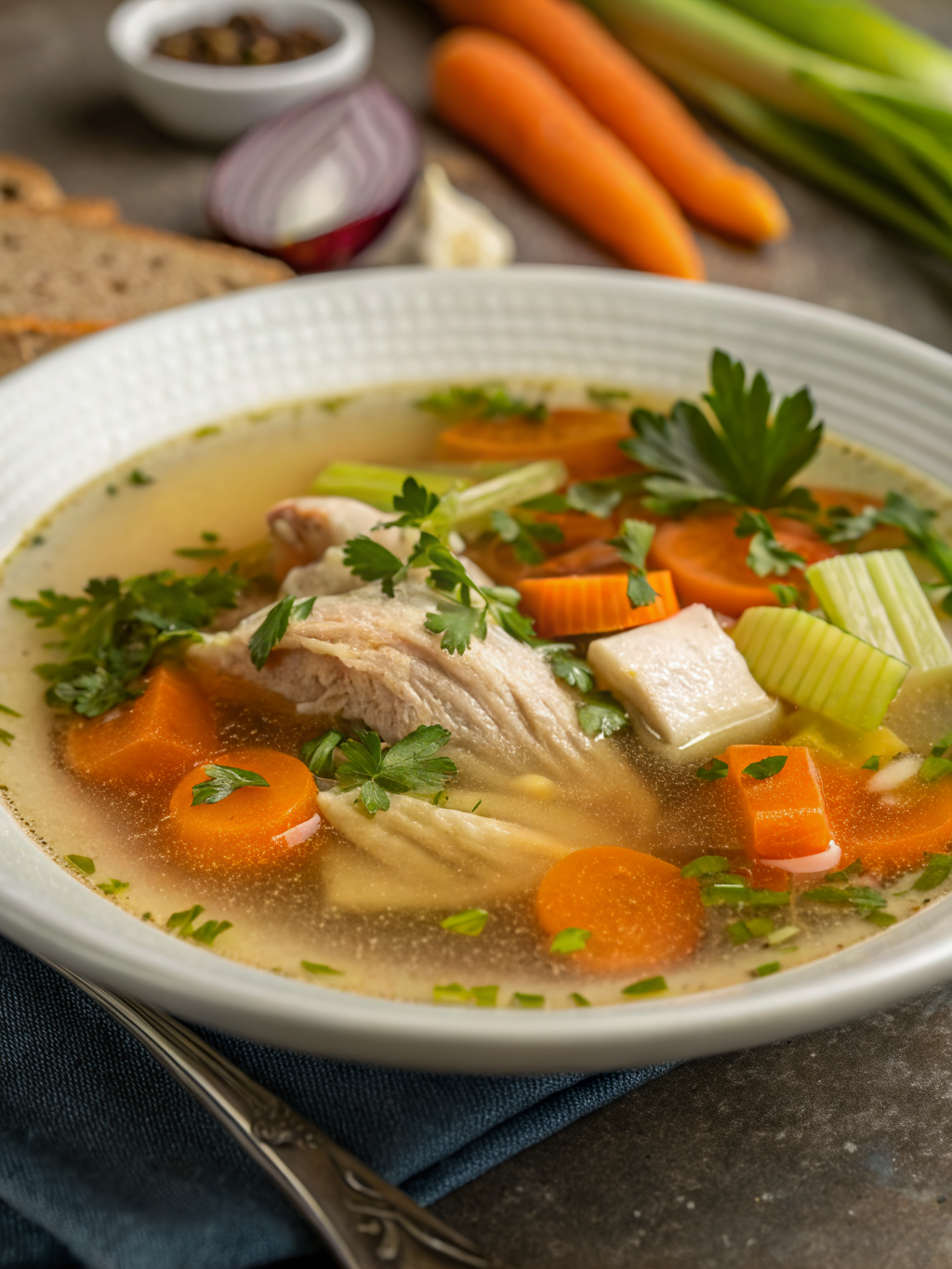
This turkey stock turns your leftover holiday carcass into a rich, golden, gelatinous liquid that elevates soups, gravies, and risottos for months to come.
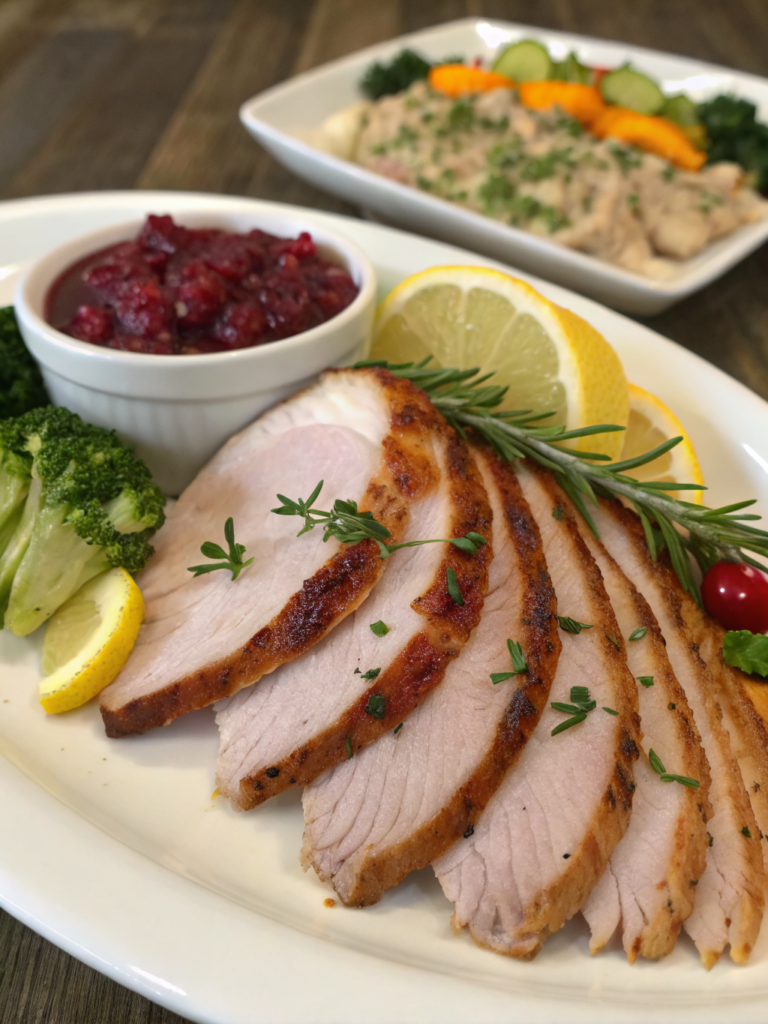
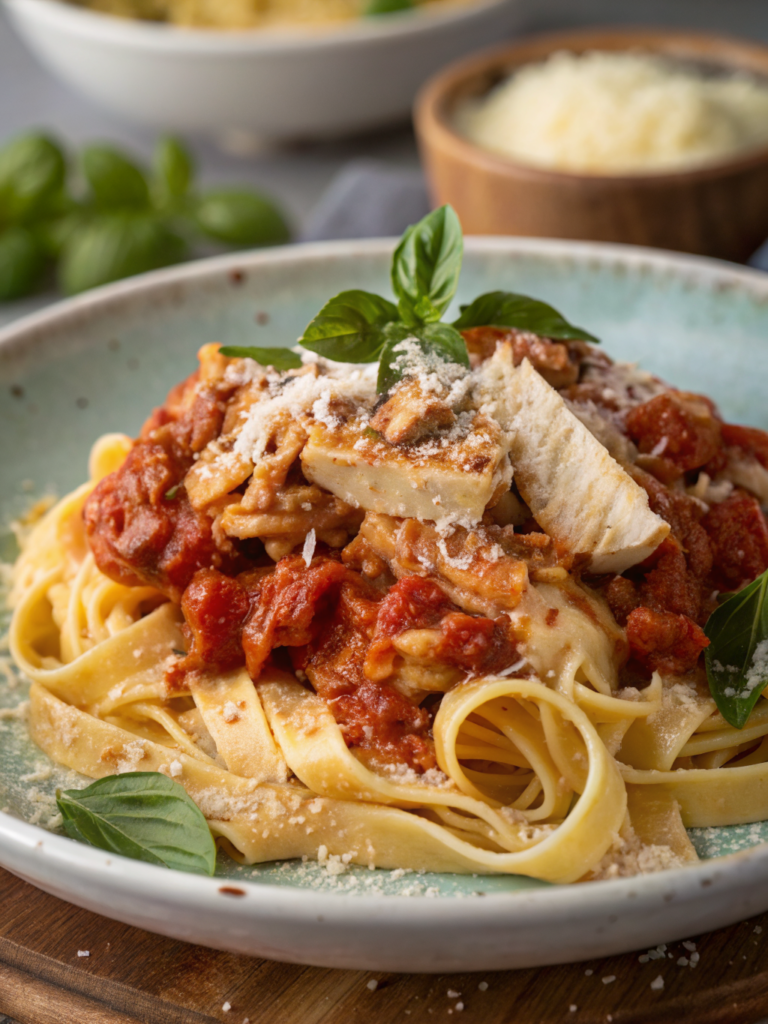
Try my Roast Turkey Breast or Turkey Bolognese next for more turkey dishes to use it in!
Why You Should Never Toss the Carcass
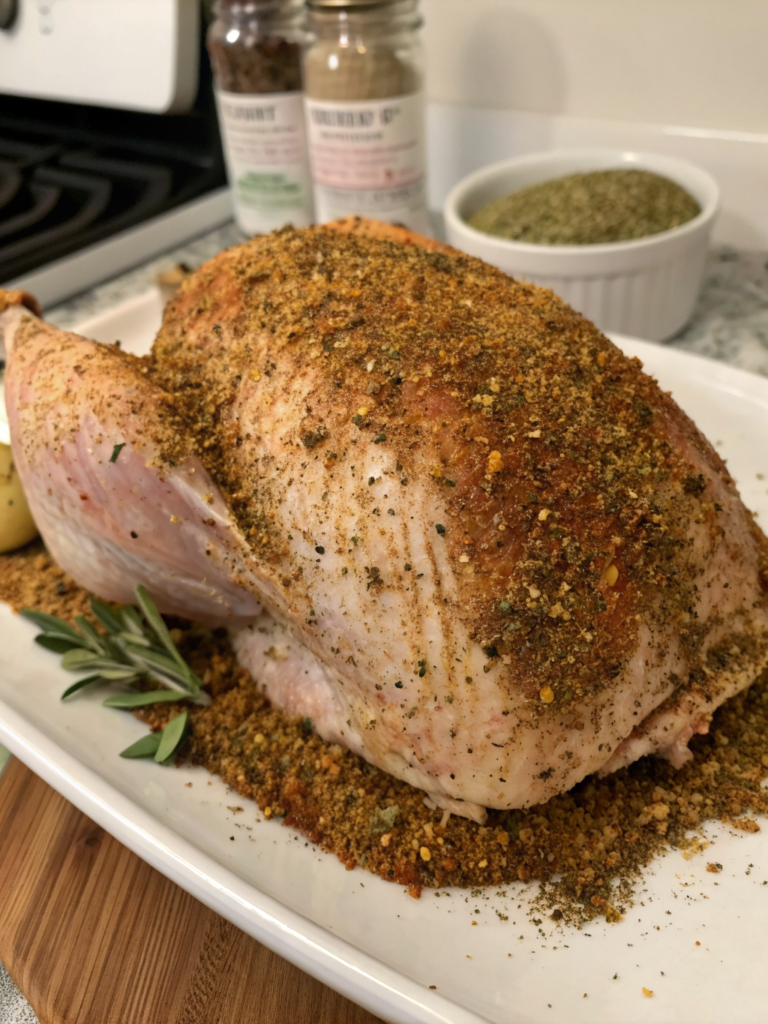
A leftover turkey carcass has more flavor left in it than most people realize. Simmering it low and slow pulls out gelatin and minerals that no store-bought stock can match, and it turns what would be trash into weeks of soups, gravies, and risottos.
The technique is almost identical to chicken stock, just scaled up for the bigger bones and longer simmer time a turkey carcass benefits from.
Ingredients
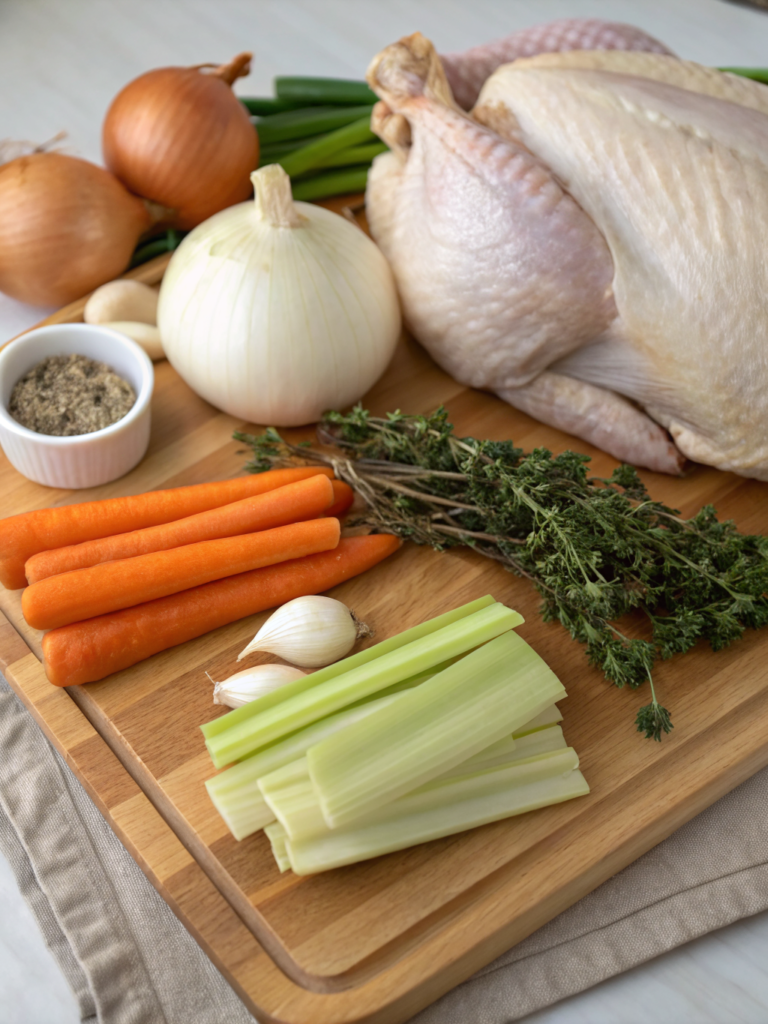
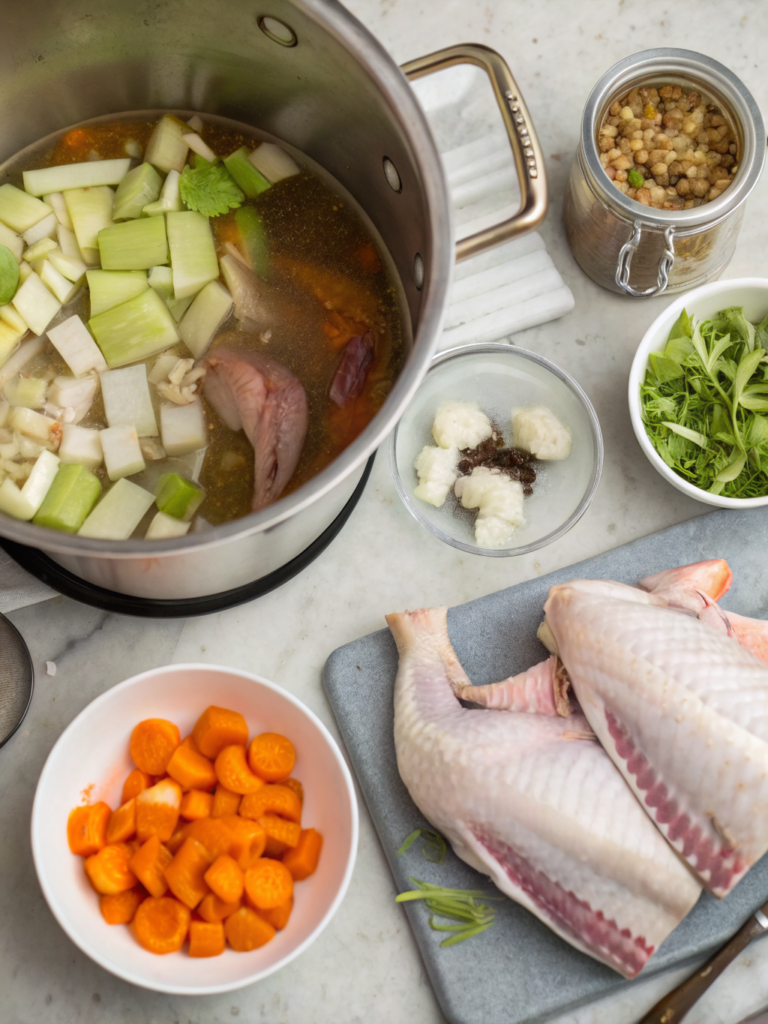
Gathering your ingredients is the first step to creating exceptional turkey stock. The beauty of this recipe is its flexibility, you can adapt based on what is available in your kitchen.
How to Make It
This is just the overview. Scroll down to the recipe card for exact measurements and timing.
Combine the turkey carcass, vegetables, and aromatics in a large pot with cold water, bring to a boil, then reduce to a bare simmer for 3-4 hours, skimming occasionally. Strain, cool, and lift off the fat before storing.
Make Ahead Method
- This stock is meant to be made ahead. Refrigerate up to 4 days in an airtight container, or freeze in portions for up to 3-4 months for best quality.
- Freeze in ice cube trays for small measured portions, perfect for pan sauces without thawing a whole batch.
- The fat cap that forms after chilling actually helps preserve the stock, so you can leave it on until you are ready to use it.
Turkey Stock
Course: TurkeyCuisine: AmericanDifficulty: Easy16
servings15
minutes3
hours30
minutes38
kcalRich, golden, gelatinous turkey stock made from a leftover carcass and bones, simmered low and slow.
Ingredients
1 turkey carcass, including leftover bones, skin, and meat scraps
2 large onions, quartered, unpeeled
3 large carrots, roughly chopped
3 celery stalks with leaves, roughly chopped
6 garlic cloves, smashed
2 bay leaves
8-10 whole black peppercorns
3-4 sprigs fresh thyme, or 1 tsp dried
2-3 sprigs fresh parsley, stems and all
1 tbsp apple cider vinegar
Cold water to cover, about 16-20 cups
Salt, optional, added at the end
Directions
- Prepare the carcass. Break down into manageable pieces with kitchen shears, including the neck and wing tips.
- Combine in the pot. Place carcass, onions, carrots, celery, garlic, bay leaves, peppercorns, thyme, parsley, and vinegar in a large stockpot. Cover with cold water by about 2 inches.
- Bring to a boil. Heat over medium-high until boiling, about 20-30 minutes, then immediately reduce heat.
- Skim the surface. During the first 30 minutes, skim off foam and impurities as they rise.
- Simmer low and slow. Maintain a bare simmer, partially covered, for 3-4 hours, checking every 45 minutes and adding water if needed.
- Strain. Cool 20 minutes, then strain through a colander into another pot, without pressing the solids.
- Cool and degrease. Cool at room temperature, then refrigerate at least 4 hours or overnight. Lift off the solidified fat before using.
- Season and store. Salt only if using immediately. Store in the fridge up to 4 days or freeze up to 3-4 months.
Notes
- For a roasted variation, roast the carcass and vegetables at 425F for 45 minutes before simmering for deeper flavor. Properly made stock should gel when chilled, which indicates good collagen extraction.
For food safety, refrigerate this stock within 2 hours of cooking and use within 3-4 days, or freeze for longer storage (USDA guidelines on leftovers).
Nutritional Information
Homemade turkey stock is remarkably nutritious. Per one-cup, 240ml, serving of unsalted stock:
- Calories: 35-40, an extremely low-calorie base for soups and sauces.
- Protein: 6-8 grams, primarily from collagen and gelatin extracted from bones and connective tissue.
- Fat: 0.5-1 gram after degreasing, minimal once the surface layer is removed.
- Carbohydrates: 1-2 grams, trace amounts from vegetables.
- Sodium: 20-30mg if unsalted, dramatically lower than commercial stocks, which often contain 500-800mg per cup.
- Rich in collagen, gelatin, glucosamine, calcium, magnesium, phosphorus, and trace minerals extracted from the bones.
Research suggests bone broth consumption may support joint health, improve skin elasticity, and promote gut health, thanks to the amino acids glycine and proline found in the gelatin.
Healthier Alternatives for the Recipe
While turkey stock is already a healthy choice, you can modify it for specific dietary needs.
- Bone Broth Version: Simmer 6-8 hours instead of 3-4 for maximum nutrient extraction, adding chicken feet if available for extra collagen.
- Anti-Inflammatory Boost: Add a 2-inch piece of fresh ginger and a teaspoon of turmeric during the last hour of simmering.
- Immune-Supporting Version: Include extra garlic and medicinal mushrooms like shiitake or reishi.
- Low-FODMAP Adaptation: Omit onions and garlic, replacing with the green parts of leeks and garlic-infused oil added after cooking.
- Mineral-Enhanced Version: Add a 4-inch piece of kombu seaweed during cooking for additional minerals, particularly iodine.
Serving Suggestions
The versatility of homemade turkey stock makes it an invaluable kitchen staple.
- Classic Turkey Soup: Combine with leftover turkey meat, egg noodles, carrots, celery, and fresh herbs for a comforting post-holiday soup.
- Risotto Base: Use instead of chicken stock in risotto, pairing beautifully with mushrooms, butternut squash, or sage for an elegant side dish.
- Gravy Base: Reduce and thicken with a roux for a rich, deeply flavored turkey gravy.
- Braising Liquid: Use in place of water when braising root vegetables or beans for extra depth.
- Morning Wellness Drink: Heat a cup with fresh herbs and a squeeze of lemon for a nourishing warm beverage.
Common Mistakes to Avoid
Even experienced cooks sometimes struggle with stock-making. Here are the most common pitfalls with turkey stock and how to avoid them.
- Boiling Instead of Simmering: Vigorous boiling emulsifies fat into the liquid, creating cloudy, greasy stock. Maintain a gentle simmer where bubbles barely break the surface.
- Adding Salt Too Early: Since stock reduces in many recipes, early salting can result in oversalted final dishes. Season individual recipes instead.
- Not Skimming Adequately: Leaving foam and impurities creates off-flavors and cloudy stock. Dedicate time during the first 30 minutes to thorough skimming.
- Insufficient Cooking Time: Stopping before 3 hours does not allow full extraction of gelatin and flavor compounds. If your cooled stock does not gel, it needed more time.
- Pressing the Solids When Straining: Forcing liquid through solids releases cloudy particles. Let gravity do the work instead.
- Starting With Hot Water: Hot water causes proteins to coagulate immediately, trapping impurities rather than letting them rise for skimming. Always start with cold water.
Storing Tips for the Recipe
Proper storage extends this stock’s usefulness across weeks of future cooking.
- Refrigerator Storage: Store in an airtight container for up to 3-4 days.
- Freezer Storage: Freeze in portions for up to 3-4 months for best quality.
- Ice Cube Portions: Freeze in ice cube trays for small, measured amounts perfect for pan sauces.
Conclusion: Nothing Goes to Waste
Turning a leftover turkey carcass into this stock is one of those kitchen habits that genuinely pays for itself. A few hours of mostly hands-off simmering gives you weeks of richer soups, gravies, and sauces than store-bought stock could ever provide.
Once you get in the habit of saving your carcass after every roast turkey, this becomes an easy, almost automatic step rather than an extra project.
FAQ
Can I make this in an Instant Pot?
Yes, an Instant Pot version takes about 2 hours total including pressurization, compared to 3-4 hours on the stovetop.
Can I use a slow cooker instead?
Yes, a slow cooker works well for 8-10 hours on low, ideal for overnight preparation.
Why did not my stock gel when chilled?
This usually means it was not simmered long enough, or there was not enough connective tissue in the carcass. Try simmering longer next time.
Do I need to roast the carcass first?
No, but roasting at 425F for 45 minutes before simmering creates a deeper, more caramelized flavor if you want that variation.
Can I use a partial carcass if I already ate most of the meat?
Yes, even picked-over bones work well. The bones and cartilage matter more than remaining meat for a good stock.
How do I know if my stock has gone bad?
Discard if it smells off or has been stored longer than the recommended refrigeration or freezing time.
Try These Next
Did You Try Our Recipes?
Best recipe ever
I love it, absolutely delicious