Chicken Stock Recipe
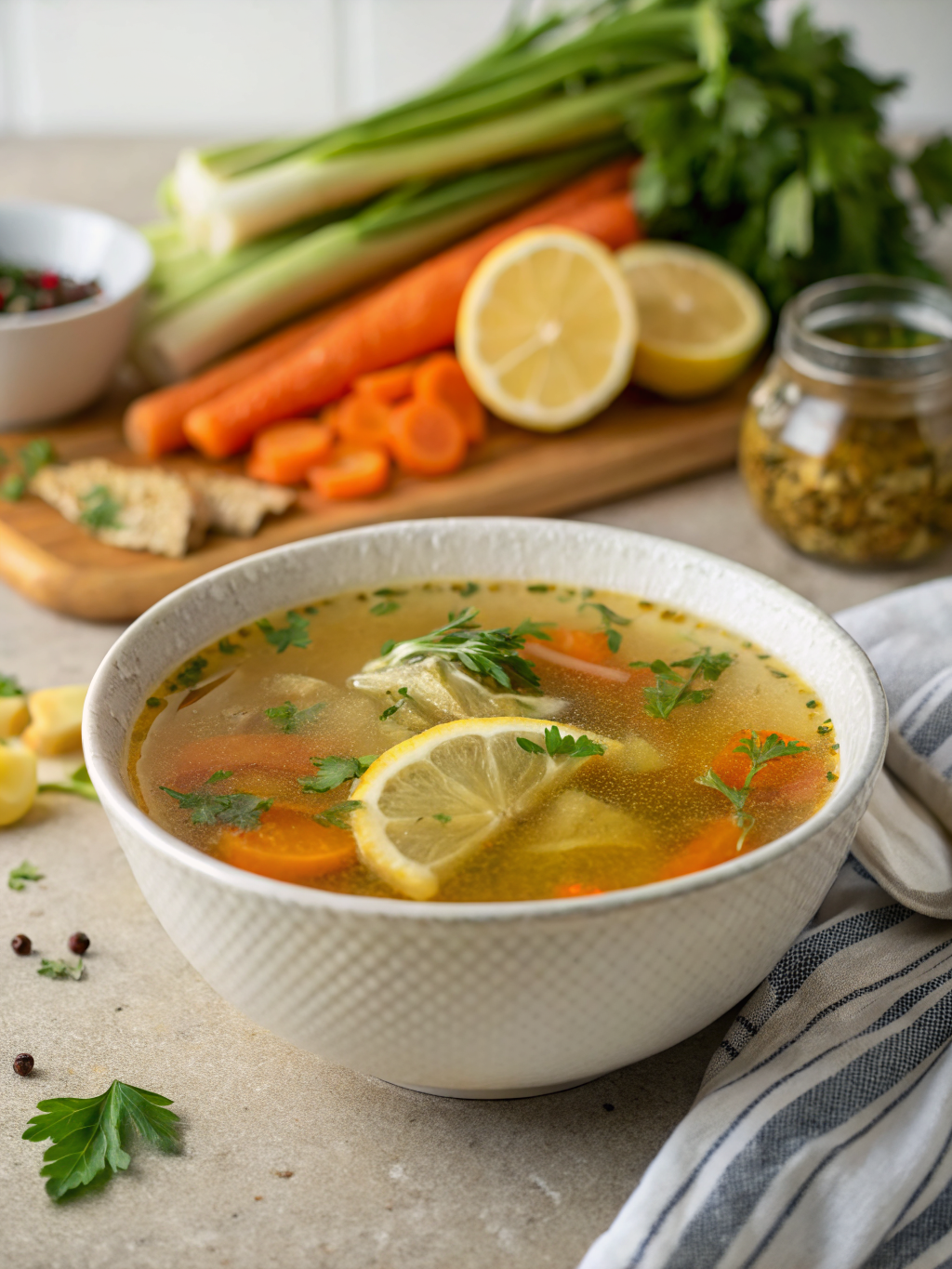
This chicken stock recipe turns simple bones and vegetables into a rich, golden, gelatinous liquid that transforms every soup, sauce, and grain dish it touches.
Try my Beef Broth Gravy or Beef and Noodles next for more from-scratch kitchen staples!
Why I Always Make My Own Stock
Once you taste real homemade chicken stock recipe results next to the boxed version, there is genuinely no going back. The gelatin content alone makes everything from risotto to gravy taste richer, and the process is almost entirely hands-off once it is simmering.
This is one of those recipes that rewards patience more than skill. Low heat and enough time matter far more than precise measurements.
Ingredients
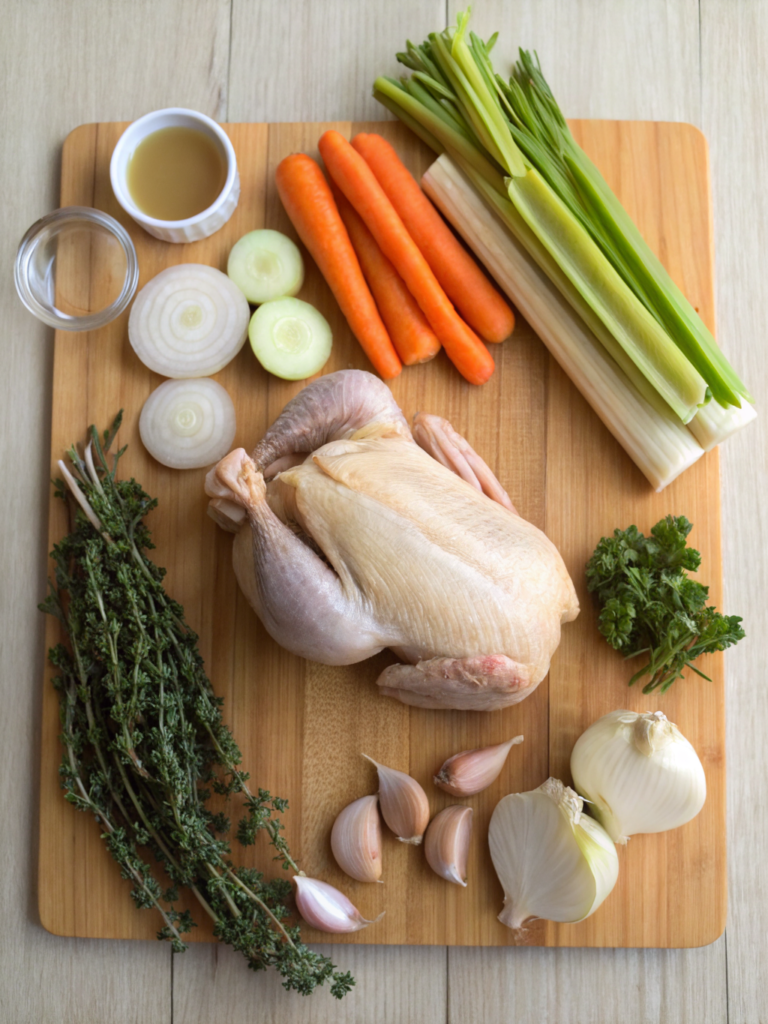
The beauty of this chicken stock recipe lies in its simplicity. Just a handful of ingredients create something truly spectacular, yielding approximately 3-4 quarts.
How to Make It
This is just the overview of this chicken stock recipe. Scroll down to the recipe card for exact measurements and timing.
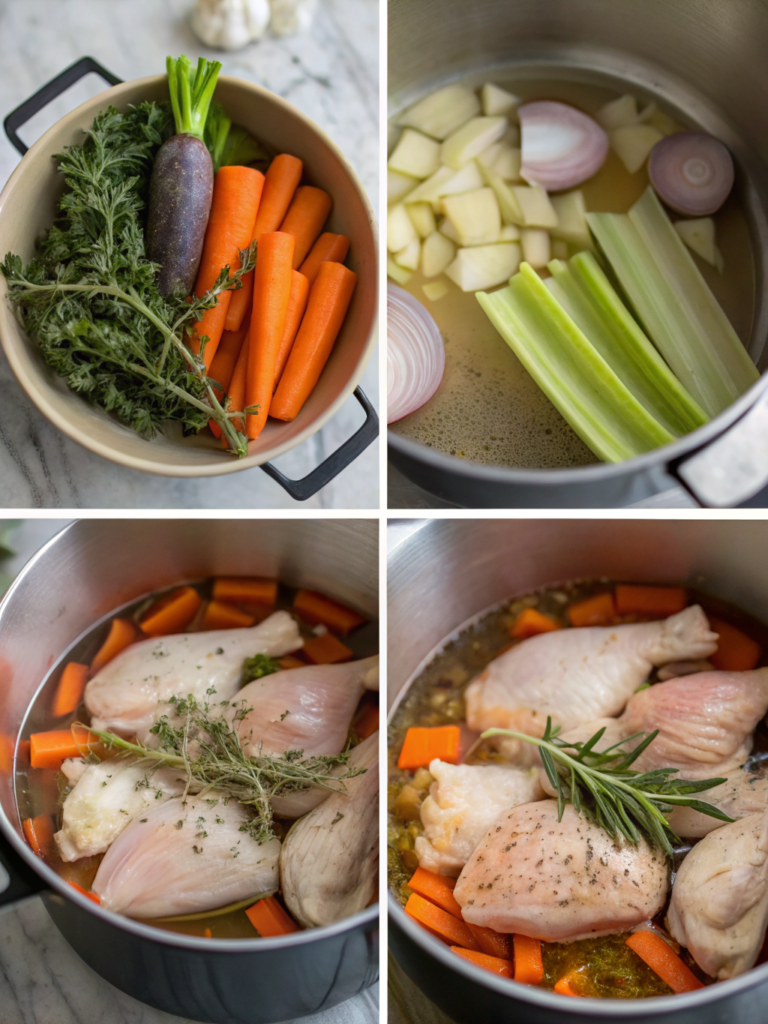
Combine bones, vegetables, and aromatics in a large pot with cold water, bring to a bare simmer, and skim the foam that rises in the first 30 minutes. Simmer low and slow for 3-4 hours, then strain, cool, and lift off the solidified fat before storing.
Make Ahead Method
- This stock is meant to be made ahead. Refrigerate up to 3-4 days in an airtight container, or freeze in portions for up to 3-4 months for best quality.
- Freeze in ice cube trays for small measured portions, perfect for adding to pan sauces without thawing a whole batch.
- The fat cap that forms on top after chilling actually helps preserve the stock underneath, so you can leave it on until you are ready to use it.
Chicken Stock Recipe
Course: ChickenCuisine: AmericanDifficulty: Easy14
servings15
minutes3
hours30
minutes40
kcalRich, golden, gelatinous chicken stock made from bones and vegetables, simmered low and slow.
Ingredients
3-4 lbs chicken bones (backs, necks, wings, or a roasted carcass)
2 large onions, quartered, unpeeled
3 large carrots, roughly chopped
3 celery stalks with leaves, roughly chopped
6-8 garlic cloves, smashed
2 bay leaves
8-10 whole black peppercorns
2-3 sprigs fresh thyme, or 1 tsp dried
1 tbsp apple cider vinegar
Cold water to cover, about 4-5 quarts
1 tsp salt, optional, added at the end
Directions
- Prepare the ingredients. Rinse the chicken bones under cold water. Roughly chop the vegetables into 2-3 inch pieces.
- Combine in the pot. Place bones, onions, carrots, celery, garlic, bay leaves, peppercorns, thyme, and vinegar in a large stockpot. Cover with cold water by about 2 inches.
- Bring to a gentle simmer. Heat over medium-high until you see the first bubbles, about 20-30 minutes, then reduce to low.
- Skim the surface. During the first 30 minutes, skim off the foam and impurities that rise to the top.
- Simmer low and slow. Maintain a bare simmer for 3-4 hours, adding water if the level drops below the ingredients.
- Strain. Let cool 15 minutes, then strain through a fine-mesh strainer or cheesecloth into a large bowl, without pressing the solids.
- Cool and degrease. Refrigerate at least 4 hours or overnight, then lift off and discard the solidified fat layer.
- Store or use. Taste and salt only if using immediately. Store in the fridge up to 3-4 days or freeze up to 3-4 months.
Notes
- For a roasted chicken stock variation, roast the bones and vegetables at 425F for 45 minutes before simmering for a deeper, more caramelized flavor. Properly made stock should gel when chilled, which indicates good collagen extraction.
For food safety, refrigerate this stock within 2 hours of cooking and use within 3-4 days, or freeze for longer storage (USDA guidelines on leftovers).
Nutritional Information
Homemade chicken stock is remarkably nutritious, offering benefits that extend far beyond flavor. Per one-cup, 240ml, serving of this chicken stock recipe, you will receive approximately:
- Calories: 35-45, depending on fat content remaining after degreasing
- Protein: 4-6 grams, primarily from collagen and gelatin extracted from bones and connective tissue
- Fat: 1-2 grams, minimal if properly degreased, contains beneficial omega-3 fatty acids
- Carbohydrates: 1-2 grams, naturally occurring from vegetables
- Sodium: 30-50 milligrams, very low unless additional salt is added
- Collagen: 2-3 grams, supports joint health, skin elasticity, and gut lining integrity
Beyond basic macronutrients, chicken stock provides significant amounts of minerals including calcium, magnesium, phosphorus, and trace minerals extracted from the bones. The gelatin content supports digestive health and may reduce inflammation.
Studies indicate that bone broth consumption may support immune function, particularly during illness. The amino acids glycine and proline found abundantly in stock support detoxification pathways and tissue repair throughout the body.
Healthier Alternatives for the Recipe
While this chicken stock recipe is already quite healthy, you can modify it to meet specific dietary needs or enhance nutritional benefits.
- For Lower Sodium: Omit salt entirely and use the stock as a base, seasoning individual dishes as needed.
- For Enhanced Mineral Content: Add chicken feet, if available, for exceptionally high collagen levels. Keep the vinegar, which is essential for extracting minerals from the bones.
- For Anti-Inflammatory Benefits: Add a 2-inch piece of fresh ginger and a teaspoon of turmeric during the last hour of simmering.
- For Immune Support: Include an entire head of garlic, separated into cloves but unpeeled, and add extra onion.
- For Organic or Clean Eating: Use bones from organic, pasture-raised chickens and organic vegetables, since stock extracts everything from the ingredients.
Serving Suggestions
The versatility of homemade chicken stock makes it an invaluable kitchen staple.
- Classic Chicken Noodle Soup: Use as the base for traditional chicken soup with vegetables, noodles, and shredded chicken.
- Risotto and Grain Dishes: Substitute stock for water when cooking rice, quinoa, farro, or making risotto.
- Braising Liquid: Use stock instead of water when braising meats or vegetables for luxurious, silky sauces.
- Sauce Base: Reduce stock by half to create a concentrated base for pan sauces, gravies, or cream sauces.
- Morning Wellness Drink: Heat a cup with fresh herbs, a squeeze of lemon, and a pinch of sea salt for a nourishing morning beverage.
- Vegetable Cooking Liquid: Steam or boil vegetables in stock instead of water to infuse extra flavor.
Common Mistakes to Avoid
Even experienced cooks sometimes struggle with stock-making. Here are the most common pitfalls with this chicken stock recipe and how to avoid them.
- Boiling Instead of Simmering: Vigorous boiling emulsifies fat into the liquid, creating cloudy, greasy stock. Always maintain a gentle simmer where bubbles barely break the surface.
- Adding Salt Too Early: Since stock reduces in many recipes, early salting can result in oversalted final dishes. Season individual recipes instead.
- Using Too Many Aromatics: Overpowering the chicken flavor with excessive herbs or vegetables defeats the purpose. Stick to the classic ratio.
- Not Skimming Adequately: Leaving foam and impurities creates off-flavors and cloudy stock. Dedicate time during the first 30 minutes to thorough skimming.
- Insufficient Cooking Time: Stopping before 3 hours does not allow full extraction of gelatin and flavor compounds. If your cooled stock does not gel, it needed more time.
- Pressing Solids When Straining: Forcing liquid through solids releases undesirable particles and creates cloudy stock. Let gravity do the work.
- Starting with Hot Water: Hot water causes proteins to coagulate immediately, trapping impurities in the liquid rather than allowing them to rise to the surface where they can be skimmed off. Always start with cold water.
Conclusion: A Kitchen Staple Worth the Time
This chicken stock recipe rewards patience more than any other skill. Once you have a batch in the freezer, you will find yourself reaching for it constantly, and every soup, sauce, and grain dish benefits from it.
It is genuinely one of those recipes where the effort-to-payoff ratio is enormous, especially since most of the time is completely hands-off.
FAQ
Can I make this chicken stock recipe in an Instant Pot?
Yes, an Instant Pot version takes about 2 hours total including pressurization, compared to 3-4 hours on the stovetop.
Can I use a slow cooker instead?
Yes, a slow cooker takes 8-10 hours on low, which works well for overnight preparation.
Why did not my stock gel when I chilled it?
This usually means it was not simmered long enough, or there was not enough connective tissue in the bones used. Try simmering longer or adding a few chicken feet.
Can I reuse the bones for a second batch?
Yes, though the second batch will be noticeably weaker in flavor and gelatin. Some cooks call this a lighter stock.
Do I need to roast the bones first?
No, but roasting at 425F for 45 minutes before simmering creates a deeper, more caramelized flavor if you want that variation.
Is it safe to leave stock simmering unattended?
Check on it periodically to maintain the heat level and top up water if needed, but it does not require constant attention.
How do I know if my stock has gone bad?
Discard if it smells off, looks cloudy in an unusual way, or has been stored longer than the recommended refrigeration or freezing time.
Can I make this with a whole raw chicken instead of bones?
Yes, this produces a stock plus cooked chicken meat you can use elsewhere, though the flavor will be lighter than using bones alone.
Try These Next
Did You Try Our Recipes?
Best recipe ever
I love it, absolutely delicious