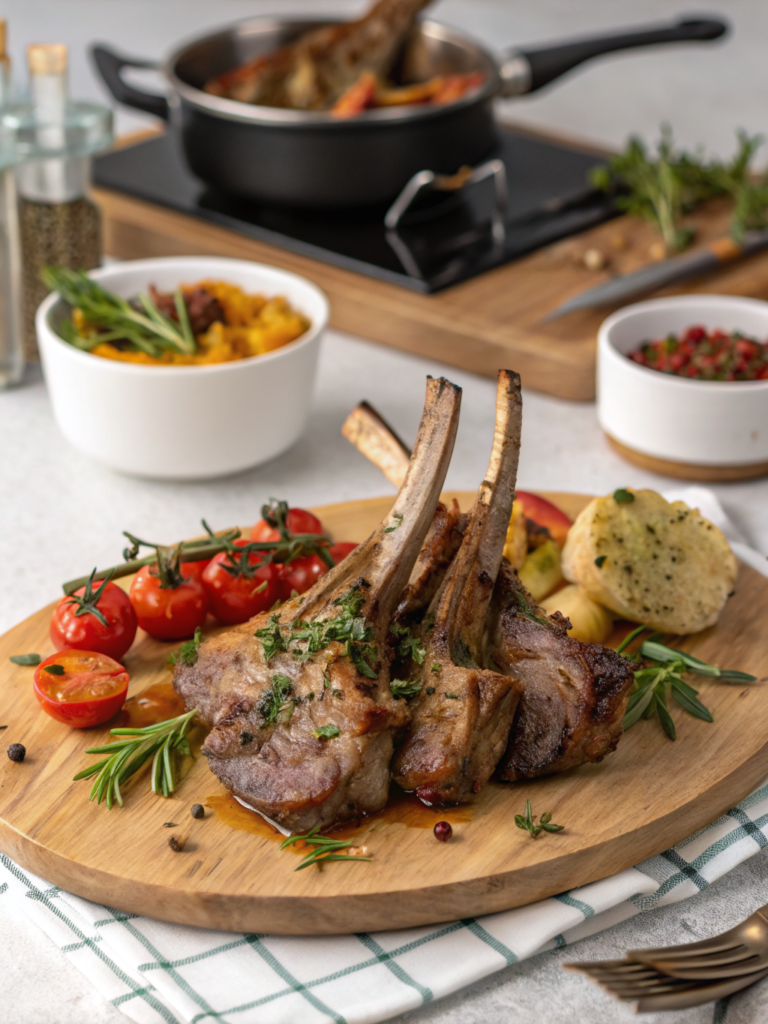
Easy Lamb Chops in Oven — Simple Beginner Recipe
Have you ever wondered why restaurant lamb chops taste so tender and flavorful while yours turn out tough and bland? The secret isn’t in expensive equipment or professional training—it’s in mastering the simple art of cooking lamb chops in oven. This beginner-friendly guide will transform your home cooking, delivering restaurant-quality results every single time. Whether you’re preparing a weeknight dinner or impressing guests at a special gathering, this straightforward oven method eliminates guesswork and guarantees succulent, perfectly cooked lamb chops.
Lamb chops are surprisingly forgiving when you understand the fundamentals. Many home cooks avoid lamb, assuming it’s complicated or requires specialized skills. The truth is that cooking lamb chops in oven provides consistent heat distribution, making it easier than stovetop methods. This recipe focuses on simplicity without sacrificing flavor, using everyday ingredients you likely already have in your pantry. By the end of this guide, you’ll have the confidence to prepare a meal that rivals any steakhouse.
Ingredients List
Gathering quality ingredients is the foundation of any exceptional dish. For this easy method to cook lamb chops in oven, you’ll need ingredients that enhance the natural flavor of the meat without overwhelming it. Here’s everything required for four servings:
- 8 lamb loin chops (about 1-inch thick, approximately 2 pounds total) – Look for chops with good marbling and a bright red color. Rib chops work equally well as a substitute.
- 3 tablespoons olive oil – Extra virgin olive oil adds richness, but regular olive oil works perfectly fine for high-heat cooking.
- 4 cloves garlic, minced – Fresh garlic provides aromatic depth. Garlic powder (1 teaspoon) can substitute in a pinch.
- 2 tablespoons fresh rosemary, chopped – Rosemary pairs beautifully with lamb. Dried rosemary (2 teaspoons) works as an alternative.
- 1 tablespoon fresh thyme leaves – Adds earthy notes. Substitute with 1 teaspoon dried thyme if needed.
- 2 teaspoons kosher salt – Enhances natural flavors and helps create a delicious crust.
- 1 teaspoon freshly ground black pepper – Adds subtle heat and complexity.
- 1 teaspoon Dijon mustard – Optional but recommended for added depth and helps herbs adhere to the meat.
- Juice of half a lemon – Brightens flavors and cuts through richness.
These ingredients create a classic garlic-herb profile that complements lamb’s distinctive taste. The beauty of this recipe lies in its flexibility—feel free to experiment with different herb combinations like oregano, mint, or sage based on your preferences.
Timing
One of the most appealing aspects of this recipe is its efficiency. From start to finish, you’ll have dinner on the table in under 45 minutes, making it perfect for busy weeknights or last-minute entertaining.
Preparation Time: 10 minutes – This includes trimming excess fat, mixing the marinade, and coating the lamb chops.
Marinating Time: 15-30 minutes (optional but recommended) – Allowing the chops to rest with the seasoning enhances flavor penetration. If you’re short on time, you can skip this step.
Cooking Time: 12-18 minutes – Depends on your preferred doneness level and the thickness of your chops.
Resting Time: 5 minutes – Critical for juice redistribution and ensuring tender, moist meat.
Total Time: Approximately 42-63 minutes. This represents roughly 30% less active cooking time compared to traditional stovetop-to-oven methods, making it significantly more convenient for home cooks.
Step-by-Step Instructions
Step 1: Prepare Your Lamb Chops
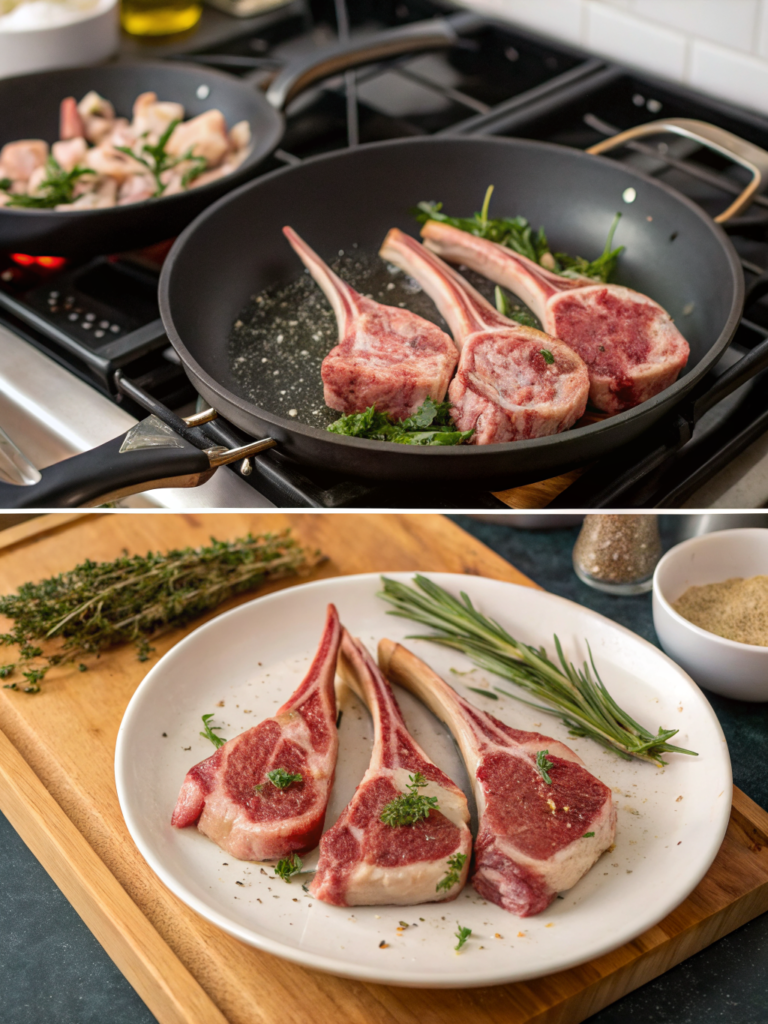
Remove the lamb chops from refrigeration 20-30 minutes before cooking. Bringing the meat to room temperature ensures your lamb chops in oven cook evenly throughout. Pat the chops completely dry with paper towels—this crucial step helps achieve a beautiful golden-brown crust. Trim any excess fat if desired, though leaving a thin layer adds flavor and moisture.
Step 2: Create the Herb Marinade
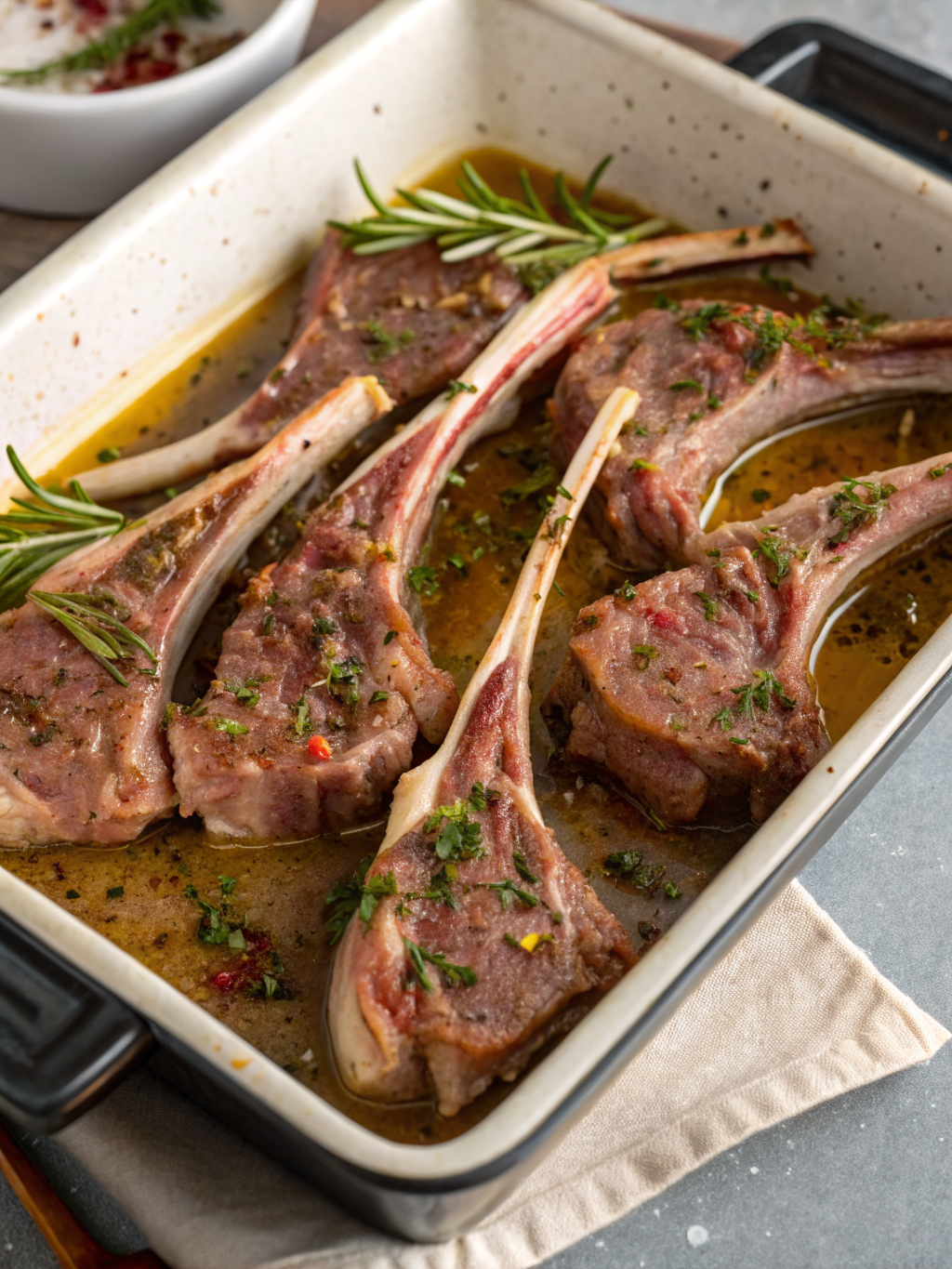
In a small bowl, combine olive oil, minced garlic, chopped rosemary, thyme, salt, black pepper, Dijon mustard, and lemon juice. Whisk these ingredients together until well incorporated. The mixture should form a fragrant paste that coats the back of a spoon. This aromatic blend will infuse your lamb chops in oven with incredible flavour.
Step 3: Season the Lamb Chops
Place the lamb chops on a large plate or baking sheet. Using your hands or a brush, generously coat both sides of each chop with the herb marinade. Make sure to rub the mixture into the meat, ensuring complete coverage. For optimal results, let the seasoned chops rest at room temperature for 15-30 minutes, allowing the flavors to penetrate the meat.
Step 4: Preheat Your Oven
Position your oven rack in the upper third of the oven, approximately 6 inches from the broiler element. Preheat your oven to 400°F (200°C). If you plan to finish with a broiler step for extra caramelization, ensure your broiler is ready to go. A properly preheated oven is essential for achieving consistent results when preparing lamb chops in oven.
Step 5: Arrange Chops on Baking Sheet
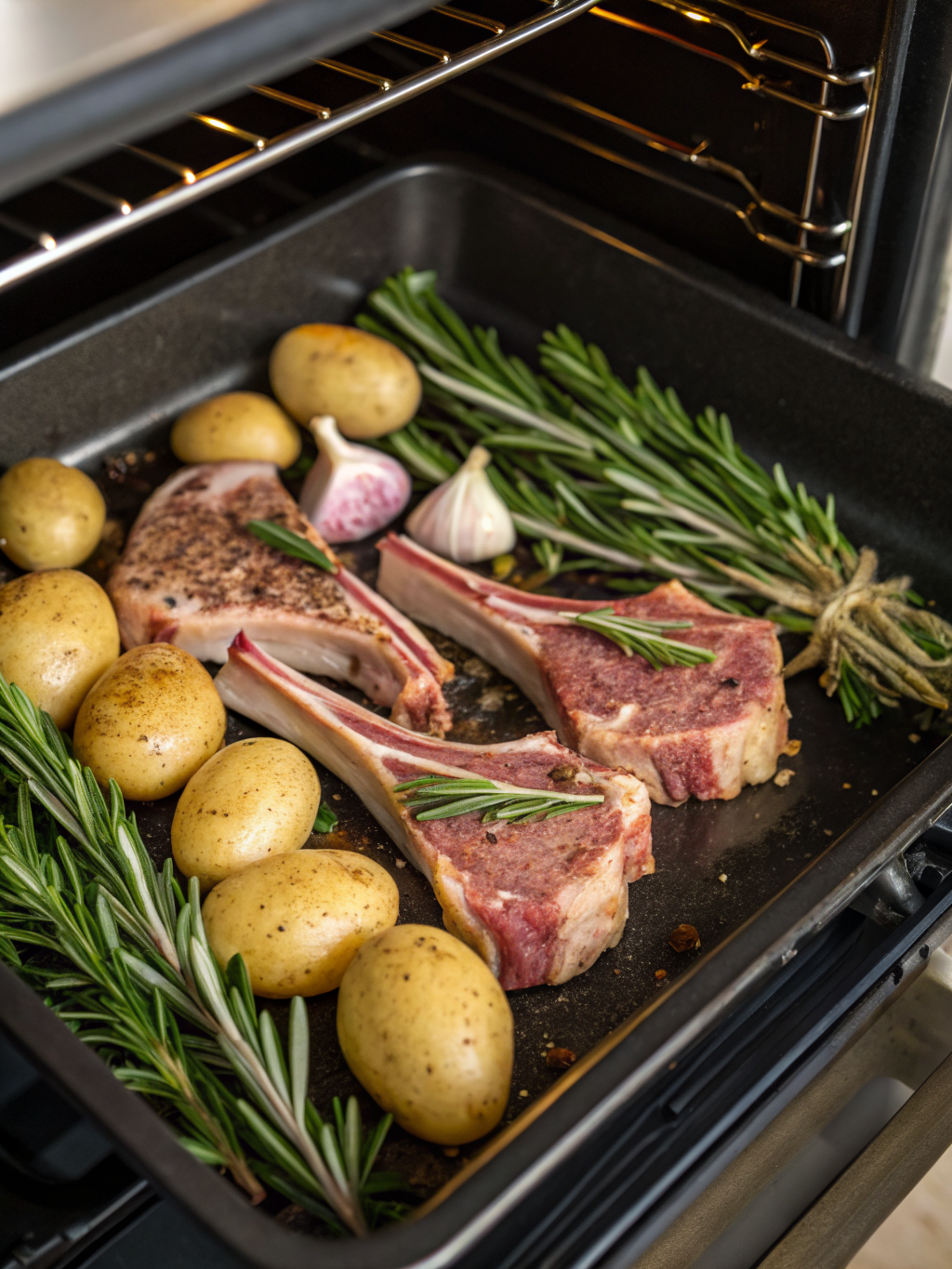
Line a rimmed baking sheet with aluminum foil for easy cleanup, then place a wire rack on top if available. The rack allows air circulation around the meat, promoting even cooking and preventing sogginess. If you don’t have a rack, placing them directly on the foil-lined sheet works fine. Arrange your lamb chops in oven safe cookware in a single layer with space between each piece.
Step 6: Bake the Lamb Chops
Place the baking sheet in the preheated oven. For medium-rare lamb chops in oven preparations (the recommended doneness for optimal tenderness and flavor), bake for 12-14 minutes. For medium, extend cooking time to 15-16 minutes. For well-done, cook for 17-18 minutes. These times work for 1-inch thick chops; adjust accordingly for thicker or thinner cuts.
The internal temperature should reach 125°F for rare, 135°F for medium-rare, 145°F for medium, and 160°F for well-done. Using an instant-read meat thermometer inserted into the thickest part of the chop (avoiding bone) provides the most accurate reading.
Step 7: Optional Broiling for Extra Crust
For an irresistible caramelized crust, switch your oven to broil during the last 2-3 minutes of cooking. Watch carefully to prevent burning—broilers work quickly and can char the herbs if left unattended. This step mimics the high-heat sear you’d get in a restaurant, creating beautiful color and enhanced flavor for your lamb chops in oven.
Step 8: Rest Before Serving
Remove the lamb chops from the oven and transfer them to a clean plate. Tent loosely with aluminum foil and let rest for 5 minutes. This resting period allows the juices to redistribute throughout the meat, ensuring each bite is tender and flavorful. Cutting immediately causes precious juices to run out onto the plate.
Nutritional Information
Understanding the nutritional profile of your meal helps you make informed dietary choices. This recipe provides a balanced combination of protein, healthy fats, and essential nutrients. Each serving (2 lamb chops) contains approximately:
Calories: 385 calories – A moderate amount for a protein-rich main course that keeps you satisfied.
Protein: 32 grams – Lamb is an excellent source of complete protein, containing all essential amino acids necessary for muscle maintenance and repair.
Total Fat: 28 grams – Includes both saturated (10g) and unsaturated fats. The olive oil contributes heart-healthy monounsaturated fats.
Carbohydrates: 2 grams – Minimal carbs make this recipe suitable for low-carb and ketogenic diets.
Fiber: 0.5 grams – Coming primarily from the herbs and garlic.
Cholesterol: 105 milligrams – Comparable to other red meats.
Sodium: 620 milligrams – Can be reduced by using less salt or opting for low-sodium alternatives.
Lamb also provides significant amounts of vitamin B12 (68% of daily value), zinc (35% DV), selenium (40% DV), and iron (15% DV). These micronutrients support immune function, energy metabolism, and oxygen transport throughout the body. The combination of high-quality protein and beneficial fats makes this dish particularly satiating.
Healthier Alternatives for the Recipe
While this recipe is already relatively nutritious, several modifications can enhance its health profile without compromising flavor. These alternatives accommodate various dietary preferences and nutritional goals.
Reduce Fat Content: Trim all visible fat from the lamb chops before cooking. This simple step can reduce total fat by approximately 20-30%. You can also reduce the olive oil to 1-2 tablespoons instead of 3, using a light coating rather than a generous application.
Lower Sodium Option: Cut the salt in half and rely more heavily on herbs, spices, and lemon juice for flavor. Adding a pinch of smoked paprika or cumin can provide depth without extra sodium. This modification reduces sodium content by approximately 50%.
Grass-Fed Lamb: Choose grass-fed lamb when possible. It contains higher levels of omega-3 fatty acids and conjugated linoleic acid (CLA), which have been associated with various health benefits. Grass-fed lamb also tends to be leaner than conventionally raised options.
Add Vegetables: Transform this into a complete sheet pan lamb chops dinner by adding vegetables like Brussels sprouts, cherry tomatoes, asparagus, or bell peppers. This increases fiber, vitamins, and minerals while creating a balanced one-pan meal.
Herb Variations: Experiment with anti-inflammatory herbs like turmeric, ginger, or oregano. These additions provide health benefits beyond basic nutrition, offering antioxidant and anti-inflammatory properties.
Yogurt Marinade Alternative: For a Mediterranean twist, marinate the chops in Greek yogurt mixed with herbs and lemon juice. The lactic acid tenderizes the meat while adding probiotics and reducing the need for added fats.
Serving Suggestions
Presentation and accompaniments elevate your lamb chops from simple dinner to memorable meal. These serving suggestions complement the rich flavor of lamb while adding variety and visual appeal to your plate.
Classic Pairings: Serve alongside creamy mashed potatoes or roasted garlic mashed cauliflower for a lower-carb option. The smooth texture contrasts beautifully with the crispy exterior of the lamb. Add steamed green beans, roasted asparagus, or sautéed spinach for color and nutrition.
Mediterranean Style: Create a Greek-inspired plate with tzatziki sauce, warm pita bread, cucumber-tomato salad, and crumbled feta cheese. The cool, tangy tzatziki provides a refreshing contrast to the warm, savory lamb.
Elegant Presentation: Arrange the lamb chops over a bed of creamy polenta or risotto. Drizzle with a red wine reduction or balsamic glaze for restaurant-quality plating. Garnish with fresh herb sprigs for visual impact.
Grain Bowls: Slice the lamb chops and serve over quinoa, couscous, or farro with roasted vegetables, hummus, and a lemon-tahini dressing. This approach creates a nutrient-dense, filling meal perfect for meal prep.
Salad Topping: Let the lamb chops rest, then slice thinly and arrange over mixed greens with goat cheese, candied walnuts, dried cranberries, and a light vinaigrette. This transforms the dish into a sophisticated lunch or lighter dinner option.
Sauce Recommendations: While the herb crust provides plenty of flavor, consider offering mint sauce, chimichurri, or a simple pan sauce made with white wine and butter. These accompaniments add moisture and complementary flavors.
Common Mistakes to Avoid
Even simple recipes can go wrong without proper technique. Being aware of these common pitfalls helps ensure success every time you prepare lamb chops in oven.
- Cooking from Cold: Placing refrigerator-cold lamb directly in the oven results in uneven cooking—overcooked exterior with an undercooked center. Always allow meat to reach room temperature for 20-30 minutes before cooking.
- Overcooking: Lamb becomes tough and dry when cooked beyond medium. The proteins contract excessively, squeezing out moisture. Use a meat thermometer and remove chops from heat 5 degrees before your target temperature, as they’ll continue cooking during rest time.
- Skipping the Rest Period: Cutting into lamb chops immediately after cooking causes flavorful juices to flood the cutting board instead of staying in the meat. Always rest for at least 5 minutes.
- Overcrowding the Pan: Placing chops too close together creates steam rather than allowing proper browning. Leave at least an inch between each chop for optimal air circulation and crust development.
- Not Drying the Meat: Moisture on the surface prevents browning and creates a steamed texture rather than a caramelized crust. Pat chops thoroughly dry with paper towels before seasoning.
- Using the Wrong Temperature: Too low and you won’t get proper browning; too high and the exterior burns before the interior cooks. The 400°F
Did You Try Our Recipes?
There are no reviews yet. Be the first one to write one.