Salmon Poke
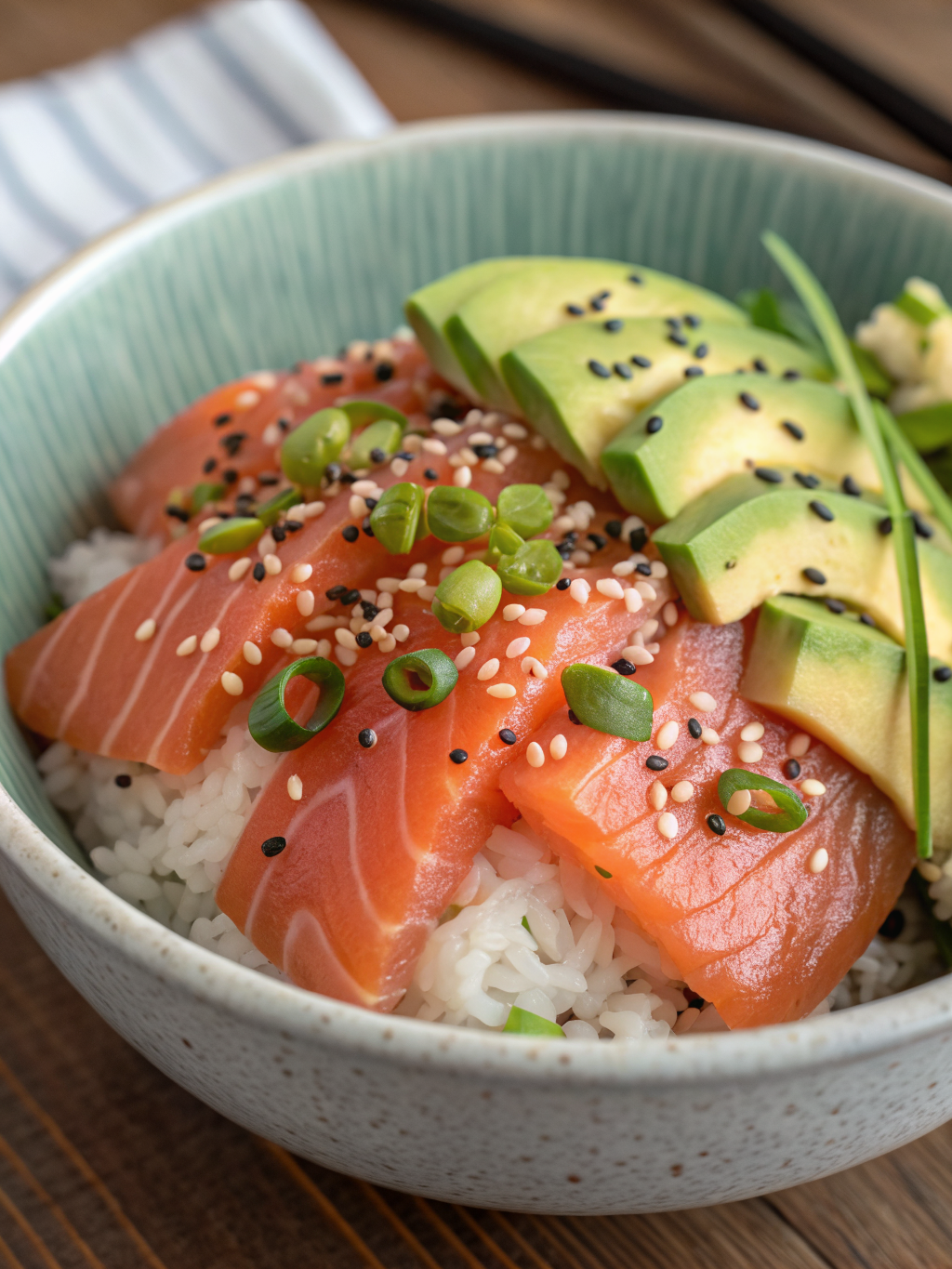
This salmon poke comes together in about 30 minutes, buttery sushi-grade salmon marinated in a sweet-savory soy sauce, served over rice with fresh, colorful toppings.
Try my Ahi Tuna Recipes or Pan Fried Salmon next for more fresh seafood ideas!
Have you ever wondered why restaurant-style poke bowls taste so incredibly fresh and vibrant, yet seem impossible to recreate at home? The secret lies in understanding the delicate balance of flavors and the quality of ingredients used in authentic Salmon Poke. This Hawaiian-inspired dish has taken the culinary world by storm, offering a perfect combination of buttery salmon, umami-rich sauces, and crisp vegetables that create an unforgettable dining experience.
Creating the perfect Salmon Poke at home is easier than you think. With fresh, sushi-grade salmon and a handful of simple ingredients, you can craft a restaurant-quality dish that rivals any trendy poke bar. This recipe delivers bold flavors while maintaining the authentic essence of traditional Hawaiian cuisine, making it perfect for quick weeknight dinners or impressive entertaining.
Ingredients List
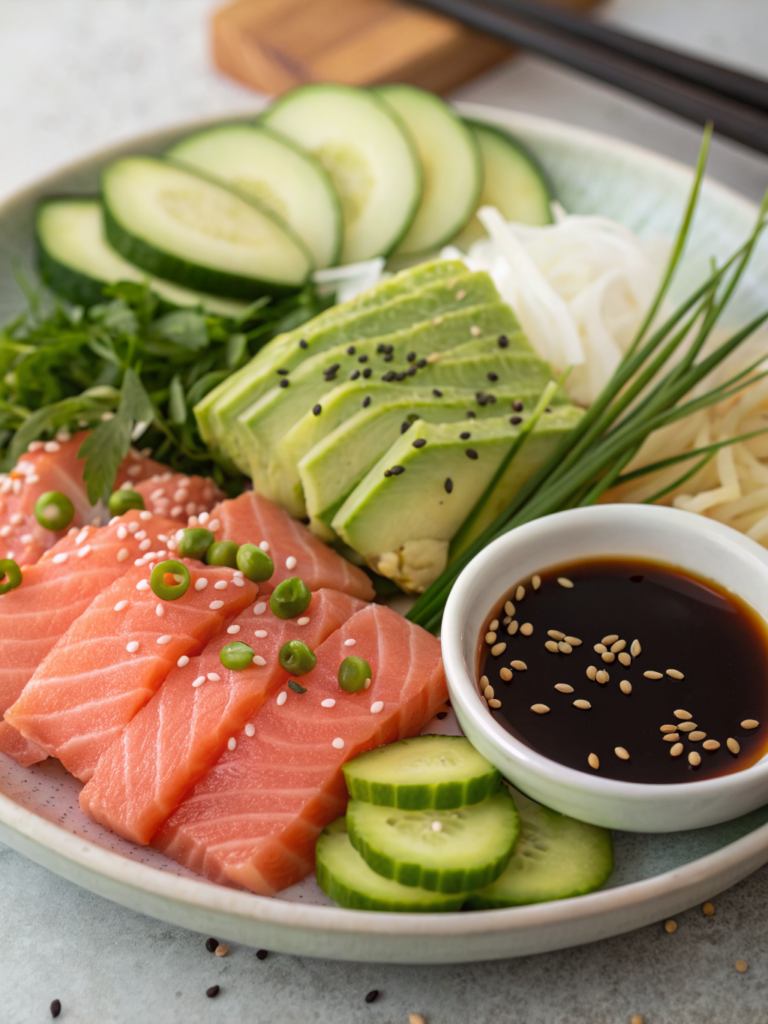
The foundation of exceptional salmon poke bowl starts with premium ingredients. Each component plays a crucial role in building layers of flavor and texture that make this dish so memorable.
How to Make It
This is just the overview for this salmon poke. Scroll down to the recipe card for exact measurements and timing.
Cube the sushi-grade salmon, marinate briefly in a soy-sesame sauce, then build your bowl with rice, avocado, edamame, and fresh vegetables, finishing with sesame seeds and green onion.
Make Ahead Method
- The marinade for this salmon poke can be made up to 3 days ahead and stored refrigerated in a sealed jar.
- Rice can be cooked up to 4 days ahead and served cold or reheated gently.
- The salmon itself should only be cubed and marinated the day you plan to serve it, since raw fish is best eaten within 24 hours of prep.
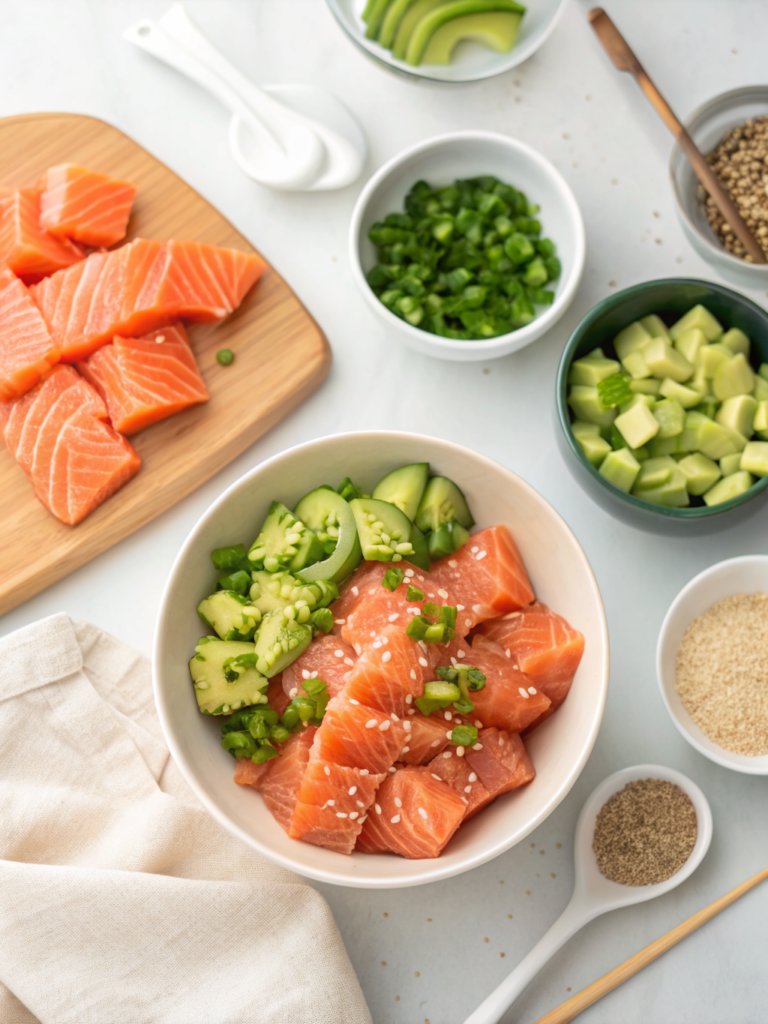
Salmon Poke
Course: SeafoodCuisine: HawaiianDifficulty: Easy4
servings30
minutes40
minutes300
kcalButtery sushi-grade salmon marinated in soy and sesame, served over rice with fresh toppings.
Ingredients
1 lb sushi-grade salmon, cubed
3 tbsp soy sauce
1 tbsp sesame oil
1 tsp rice vinegar
2 tsp sriracha
1 tbsp honey
1/2 tsp fresh grated ginger
2 green onions, thinly sliced
1 tbsp sesame seeds
1 avocado, diced
1/4 cup edamame
2 cups cooked rice, for serving
Cucumber and seaweed salad, optional garnish
Directions
- Prepare the salmon. Pat completely dry, then cube into uniform 3/4-inch pieces using a sharp knife.
- Make the marinade. Whisk together soy sauce, sesame oil, rice vinegar, sriracha, honey, and ginger until combined.
- Marinate. Gently fold salmon into the marinade. Refrigerate 15-30 minutes, no longer than 45 minutes.
- Prep toppings. Dice avocado just before serving, thaw and dry edamame, and slice any additional vegetables.
- Assemble. Layer rice in bowls, top with marinated salmon, then arrange avocado, edamame, and garnishes around it.
- Finish and serve. Sprinkle with sesame seeds and green onion, then serve immediately while cold.
Notes
- Always use salmon explicitly labeled sushi-grade or sashimi-grade for this salmon poke, since it is eaten raw. Do not marinate longer than 45 minutes, the acid will start to cook the fish and change its texture.
Nutritional Information
This salmon poke recipe delivers exceptional nutritional value, making it as healthy as it is delicious. Each serving provides approximately 380-420 calories, depending on portion sizes and optional additions like avocado and rice.
The salmon contributes roughly 35-40 grams of high-quality protein per serving, supporting muscle maintenance and satiety. This protein content represents about 70-80% of the average person’s protein needs per meal, making it exceptionally satisfying.
Omega-3 fatty acids are abundant in this dish, with each serving providing approximately 2,000-2,500mg of EPA and DHA combined. These essential fats support heart health, brain function, and reduce inflammation throughout the body.
The dish contains healthy fats from salmon, sesame oil, and avocado, totaling approximately 18-22 grams per serving. These fats enhance nutrient absorption and provide sustained energy without causing blood sugar spikes.
Carbohydrate content varies based on your base choice. With white rice, expect 45-50 grams of carbs; brown rice provides similar amounts with added fiber. Using cauliflower rice reduces carbs to under 10 grams per serving.
Sodium content ranges from 600-800mg per serving, primarily from soy sauce. This represents about 25-35% of the recommended daily intake. Low-sodium soy sauce can reduce this by approximately 40%.
Healthier Alternatives for the Recipe
Transform your salmon poke into an even more nutritious powerhouse with these thoughtful modifications. Swap white rice for nutrient-dense quinoa, which provides complete protein and additional fiber while maintaining a satisfying texture.
Reduce sodium by using coconut aminos instead of soy sauce, cutting sodium content by up to 60% while adding subtle sweetness. This substitution works particularly well for those monitoring blood pressure or following low-sodium diets.
Increase vegetable content by adding shredded purple cabbage, spiralized carrots, or snap peas. These additions boost fiber, vitamins, and antioxidants while adding satisfying crunch and vibrant color to your bowl.
For a lower-calorie version, use cauliflower rice as your base, reducing calories by approximately 150-200 per serving. This modification makes the dish more keto-friendly while maintaining volume and satisfaction.
Substitute honey with stevia or monk fruit sweetener to reduce sugar content without sacrificing the necessary sweetness that balances the marinade. This change reduces carbohydrates by about 4 grams per serving.
Add fermented vegetables like kimchi or pickled ginger to introduce beneficial probiotics that support digestive health. These additions enhance flavor complexity while providing gut-health benefits.
Serving Suggestions
Elevate your salmon poke experience by serving it in creative, appealing ways that suit various occasions. For casual family dinners, set up a DIY poke bowl bar with multiple toppings, allowing everyone to customize their perfect combination.
Transform the poke into elegant appetizers by serving small portions in Asian soup spoons or on crispy wonton chips. This presentation works beautifully for cocktail parties or sophisticated gatherings, offering impressive visual appeal.
Create a deconstructed sushi experience by serving the poke alongside nori sheets, allowing guests to make hand rolls. This interactive approach adds entertainment value while maintaining the authentic flavors of traditional Hawaiian poke.
Pair your poke bowl with miso soup and seaweed salad for a complete Japanese-inspired meal. The warm soup provides pleasant temperature contrast to the cool poke, creating a more satisfying dining experience.
For summer entertaining, serve the poke in hollowed-out pineapple boats or coconut shells for tropical presentation. This dramatic serving style enhances the Hawaiian origins of the dish and creates memorable photo opportunities.
Accompany with chilled sake, Japanese beer, or crisp white wine like Sauvignon Blanc. These beverages complement the delicate fish flavors without overwhelming the subtle marinade nuances.
Common Mistakes to Avoid
Understanding potential pitfalls helps ensure your salmon poke turns out perfectly every time. Learn from these common errors to achieve restaurant-quality results consistently.
- Using non-sushi-grade salmon – Regular salmon may contain parasites unsafe for raw consumption. Always purchase from reputable sources that specifically label fish as sushi-grade or sashimi-grade.
- Over-marinating the fish – Leaving salmon in acidic marinade beyond 45 minutes causes the texture to become mushy and “cooked” by the acid, losing the desired fresh, silky quality.
- Cutting uneven pieces – Inconsistent cube sizes result in uneven marinating and an unprofessional appearance. Take time to cut uniform pieces for best results.
- Serving at room temperature – Salmon poke should be served cold for food safety and optimal texture. Keep ingredients refrigerated until serving time.
- Using dull knives – A dull knife tears salmon rather than cleanly slicing it, damaging texture and appearance. Always use sharp knives when working with raw fish.
- Skipping the ginger – Fresh ginger provides essential aromatic complexity and helps balance the richness of salmon. Dried ginger cannot replicate this effect adequately.
- Adding too much sauce – Drowning the salmon in marinade masks the delicate fish flavor. The marinade should enhance, not overpower, the natural taste of quality salmon.
- Preparing too far in advance – While convenient, making poke more than 2-3 hours ahead compromises texture and freshness. Prepare components separately and assemble shortly before serving.
Storing Tips for the Recipe
Proper storage techniques ensure your salmon poke remains safe and delicious. Raw marinated salmon should be consumed within 24 hours of preparation for optimal food safety and quality.
Store marinated salmon in an airtight container in the coldest part of your refrigerator, typically the back of the bottom shelf. Maintain temperature at 38°F or below to inhibit bacterial growth.
Keep vegetables and salmon separate until serving time. Store cut vegetables in sealed containers with paper towels to absorb excess moisture, maintaining crispness for up to 2 days.
If you have leftover poke, avoid freezing as this dramatically affects the texture of previously raw fish. Instead, consider cooking the salmon by searing briefly or incorporating into a cooked dish.
Prepare the marinade up to 3 days in advance and store refrigerated in a sealed jar. This allows flavors to meld beautifully and saves time when you’re ready to prepare the dish.
Rice bases can be prepared ahead and refrigerated for up to 4 days. Reheat gently or serve at room temperature, depending on preference. Cold rice actually works well in poke bowls.
Avocado should always be cut fresh just before serving to prevent oxidation and browning. If you must prepare ahead, store with plastic wrap pressed directly against the cut surface.
Conclusion
Creating authentic, restaurant-quality salmon poke at home is remarkably achievable with quality ingredients and proper technique. This versatile dish offers incredible nutritional benefits, delivering heart-healthy omega-3s, high-quality protein, and vibrant flavors that satisfy both health-conscious diners and food enthusiasts alike.
FAQ
Is it safe to eat raw salmon in poke?
Yes, as long as you use salmon explicitly labeled sushi-grade or sashimi-grade, which has been handled specifically for raw consumption.
Can I use frozen salmon for salmon poke?
Yes, in fact previously frozen sushi-grade salmon is often safer, since proper freezing kills parasites. Thaw completely in the refrigerator before using.
How long does salmon poke last in the fridge?
Raw marinated salmon should be eaten within 24 hours for the best food safety and quality.
Can I make this with cooked salmon instead?
Yes, if you prefer not to eat raw fish, sear or bake the salmon first, then toss it in the marinade while still warm or cooled.
What can I substitute for salmon?
Sushi-grade ahi tuna works beautifully in this same marinade and assembly method.
Try These Next
Did You Try Our Recipes?
Best recipe ever
I love it, absolutely delicious