Salmon and Rice Recipe
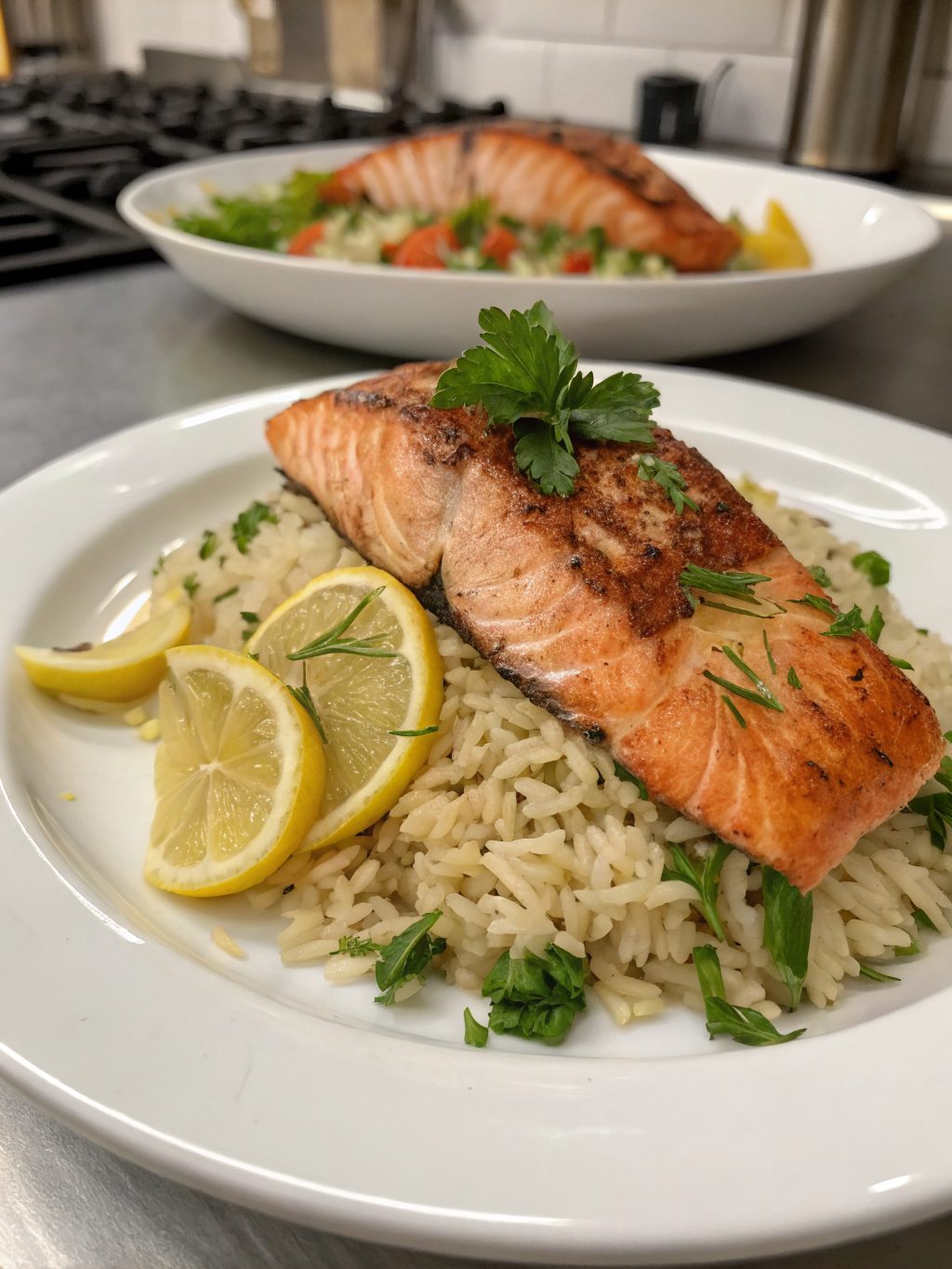
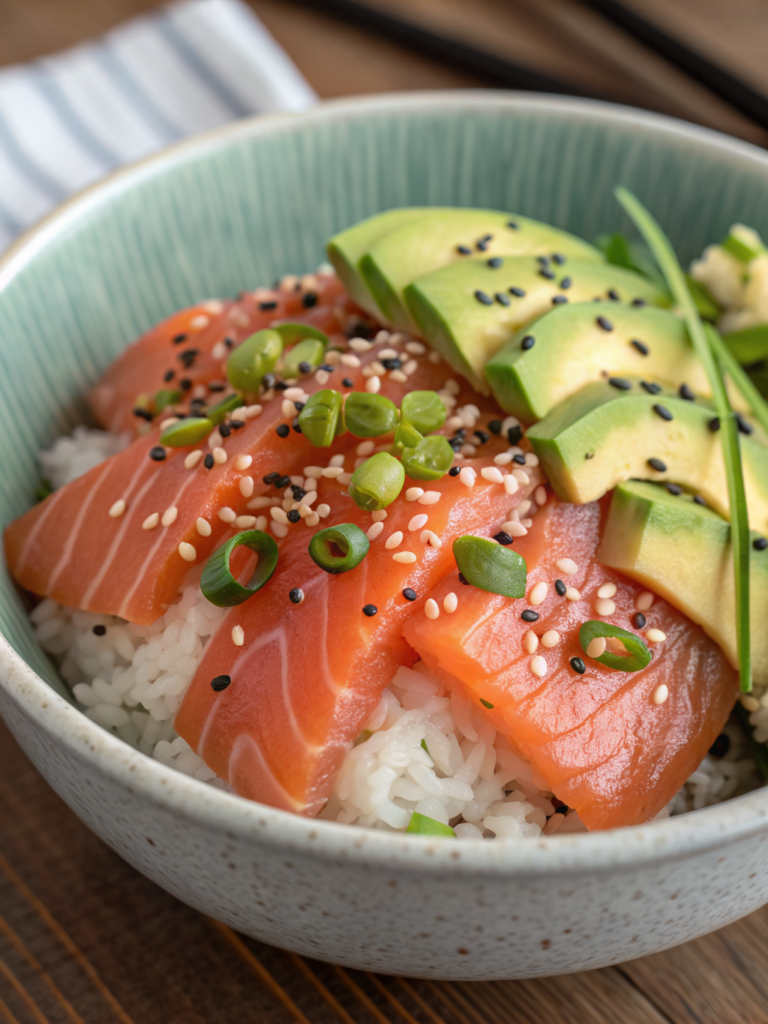
This salmon and rice recipe pairs crispy, glazed salmon with fluffy jasmine rice for a genuinely balanced bowl, ready in about 30 minutes.
Try my Pan Fried Salmon or Honey Salmon Recipe next for more salmon dinners!
Why This Salmon and Rice Bowl Actually Works
The trick to this salmon and rice recipe tasting like something from a restaurant is timing the two components to finish together, and reserving a bit of fresh glaze to drizzle at the very end. That fresh hit of sauce on top of the caramelized coating is what makes the flavor feel layered instead of one-note.
Rinsing the rice until the water runs clear also matters more than people expect. Skip it and you end up with gummy, clumped grains instead of the fluffy base this bowl is built on.
Ingredients
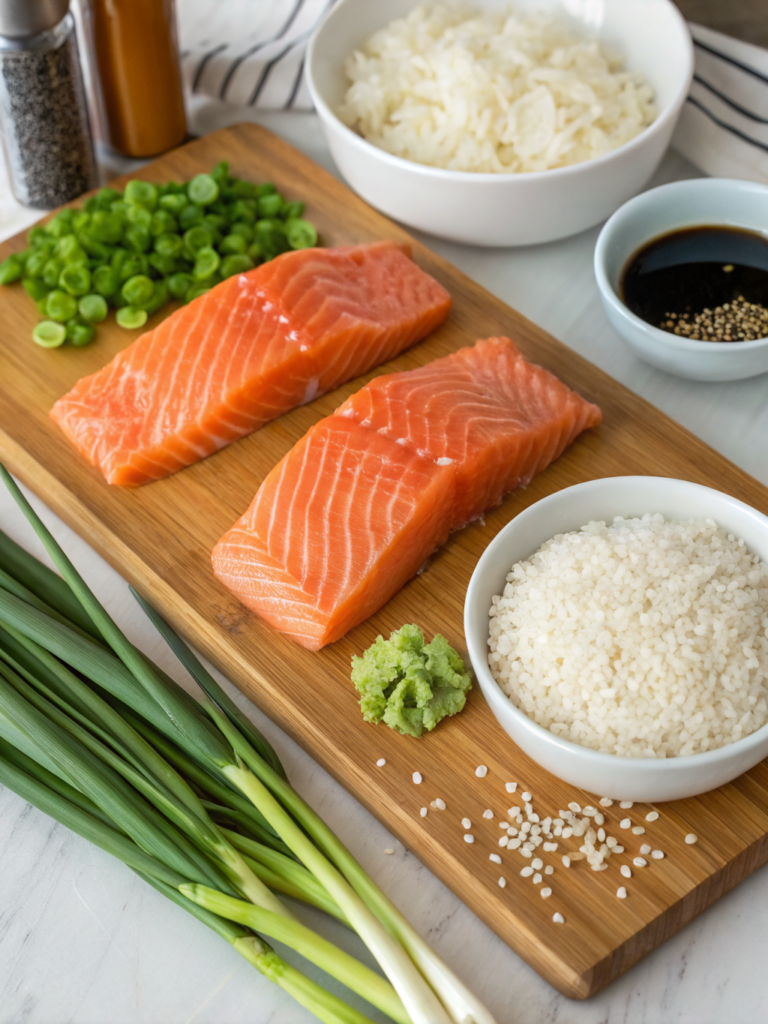
Gathering quality ingredients is the foundation of this salmon and rice recipe. Each component plays a role in creating the perfect harmony of textures and tastes across the bowl.
How to Make It
This is just the overview. Scroll down to the recipe card for exact measurements and timing.
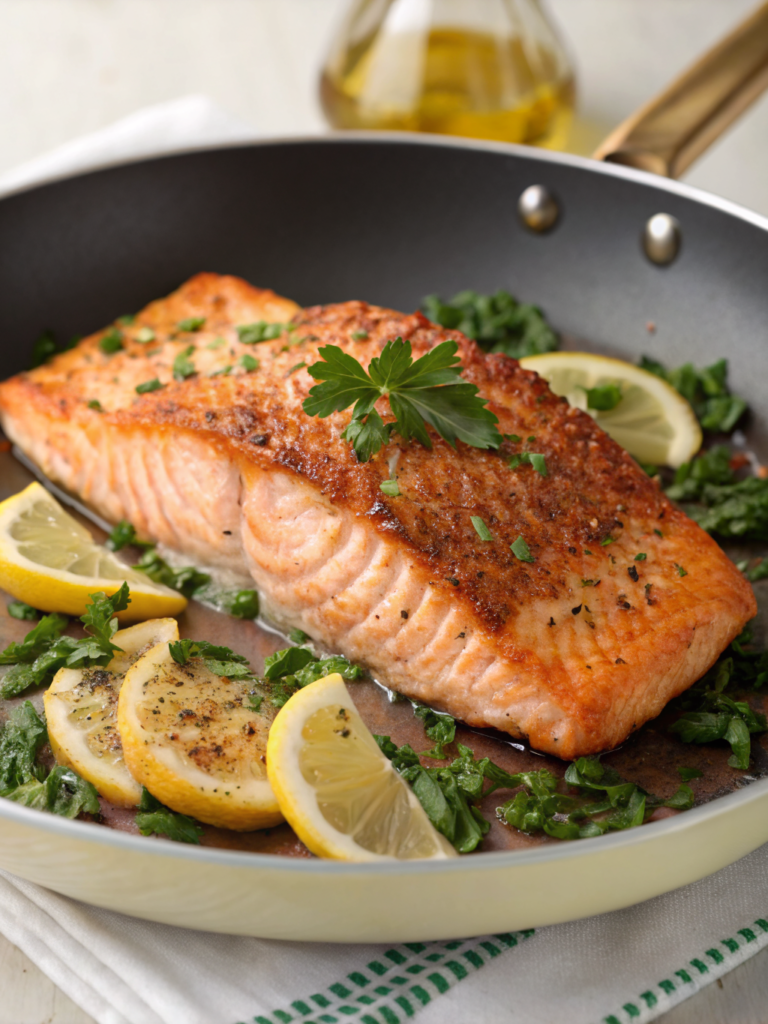
Rinse and cook the rice while you whisk together a soy-honey-ginger glaze, reserving some for later. Sear the salmon skin-side down until crispy, flip, then baste with the glaze until caramelized. Assemble over rice and drizzle with the reserved fresh glaze.
Make Ahead Method
- The glaze can be made up to 3 days ahead and stored in the fridge.
- Rice can be cooked a day ahead and reheated with a splash of water to restore fluffiness.
- The salmon is best seared fresh, though leftovers reheat reasonably well gently at low heat.
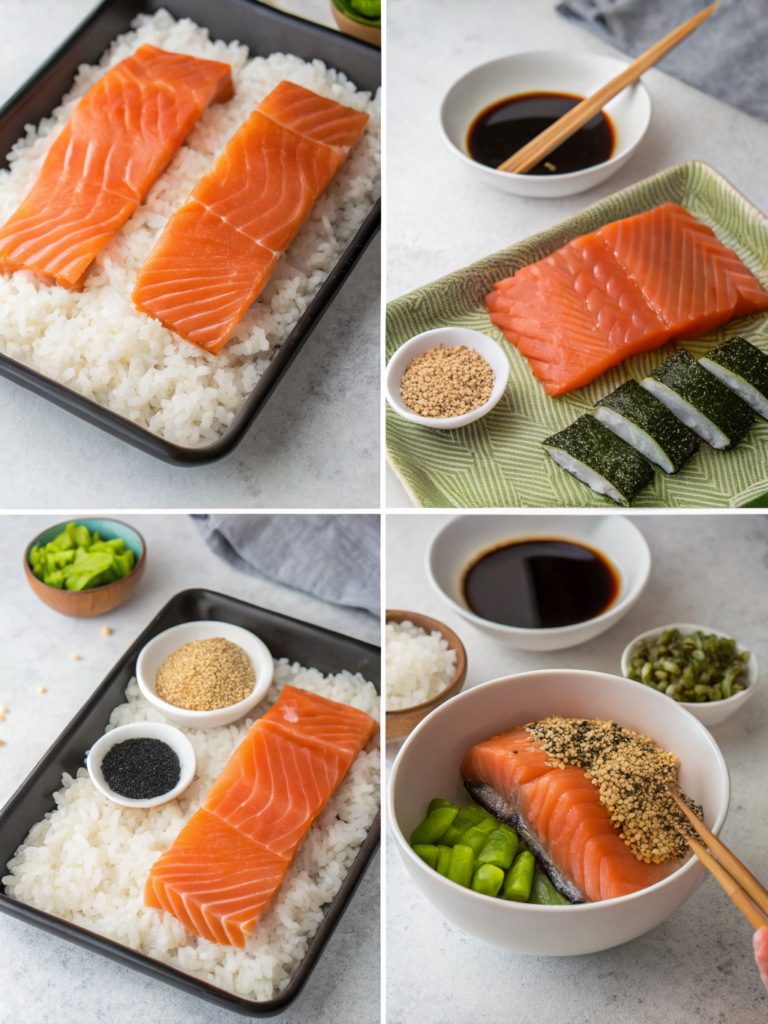
Salmon and Rice
Course: SeafoodCuisine: AsianDifficulty: Easy4
servings30
minutes40
minutes300
kcalCrispy, glazed salmon over fluffy jasmine rice, a genuinely balanced bowl ready in about 30 minutes.
Ingredients
2 salmon fillets, 6 oz each, skin-on
1 cup jasmine rice, uncooked
3 tbsp soy sauce
2 tbsp honey
1 tbsp fresh ginger, minced
3 garlic cloves, minced
1 tbsp sesame oil
1 tbsp rice vinegar
2 green onions, sliced
1 tbsp sesame seeds
1 tbsp neutral oil, for searing
Optional toppings: avocado, cucumber, edamame, shredded carrots, nori strips
Directions
- Prepare the rice. Rinse until water runs clear. Combine with 1.5 cups water and a pinch of salt, bring to a boil, then cover and simmer on low 15 minutes.
- Make the glaze. Whisk together soy sauce, honey, ginger, garlic, sesame oil, and rice vinegar. Reserve 2 tbsp for drizzling later.
- Prepare the salmon. Pat completely dry, season lightly with salt and pepper. Score the skin with a few shallow cuts if skin-on.
- Sear. Heat oil in a skillet over medium-high. Place salmon skin-side down, cook undisturbed 4-5 minutes until crispy. Flip, cook 3-4 minutes more.
- Glaze and finish. Reduce heat, pour the glaze over the salmon, and baste continuously 1-2 minutes until caramelized. Remove at 145F.
- Assemble. Divide rice between bowls, top with salmon, drizzle with reserved glaze, and garnish with green onions and sesame seeds.
Notes
- Rinse the rice until the water runs clear, this step prevents gummy texture. Do not skip reserving fresh glaze for the end, it adds a brightness the cooked glaze alone does not have.
The USDA recommends cooking fish to a minimum internal temperature of 145°F (USDA guidelines).
Nutritional Information
This salmon and rice recipe delivers exceptional nutritional value. Each serving contains approximately:
- Calories: 520 | Protein: 42g (84% DV) | Healthy Fats: 18g, including about 2,200mg omega-3s | Carbohydrates: 48g | Fiber: 2g | Sodium: approximately 680mg, or 420mg using low-sodium soy sauce
The omega-3 content exceeds the American Heart Association weekly recommendation in just two meals. This bowl also provides vitamin D (127% DV), vitamin B12 (82% DV), selenium (78% DV), and potassium (15% DV).
Healthier Alternatives for the Recipe
Adapting this recipe to various dietary preferences is remarkably simple.
- Low-Carb Option: Replace jasmine rice with cauliflower rice, reducing carbs by about 85 percent and calories to roughly 320 per serving.
- Whole Grain Boost: Substitute brown rice or quinoa for additional fiber and minerals.
- Sugar-Conscious Version: Replace honey with a sugar-free sweetener or reduce by half, cutting added sugars significantly.
- Extra Vegetables: Add steamed broccoli, snap peas, or bok choy for more nutrient density and volume.
- Reduced Sodium: Use coconut aminos instead of soy sauce for about a 73 percent sodium reduction, with a slightly sweeter flavor.
Serving Suggestions
Presentation transforms this simple meal into something special.
- Rainbow Bowl: Arrange purple cabbage, orange carrots, edamame, and red bell peppers around the salmon for visual impact and diverse nutrients.
- Spicy Kick: Drizzle with sriracha mayo, mixing 2 tbsp mayonnaise with 1 tsp sriracha.
- Fresh Herb Garnish: Top with cilantro, Thai basil, or mint for aromatic freshness.
- Crunchy Element: Add crispy wonton strips, toasted nori, or crushed peanuts for texture.
- Meal Prep Approach: Store rice, salmon, vegetables, and sauce in separate containers, assembling fresh when ready to eat.
Common Mistakes to Avoid
Understanding potential pitfalls helps ensure success every time you prepare this dish.
- Overcooking the Salmon: It continues cooking after removal from heat. Remove it when slightly underdone in the center.
- Skipping the Rice Rinse: Unwashed rice creates gummy texture rather than fluffy, separated grains.
- Using Wet Salmon: Moisture prevents proper searing. Always pat fillets completely dry first.
- Flipping Too Early: Moving salmon before it naturally releases tears the flesh. Wait until it lifts easily with a spatula.
- Overcrowding the Pan: This reduces temperature and causes steaming instead of searing. Use a large skillet or cook in batches.
- Neglecting to Taste the Glaze: Soy sauce brands vary in saltiness, always taste and adjust before applying.
- Skipping the Rest: Allowing salmon to rest 2-3 minutes redistributes juices, ensuring every bite is moist.
Storing Tips for the Recipe
Proper storage extends the life of this salmon and rice recipe while maintaining quality and safety.
- Refrigerator Storage: Store salmon and rice in separate airtight containers for up to 3 days. Keeping components separate prevents the rice from absorbing moisture and turning soggy.
- Reheating: Reheat rice in the microwave with a damp paper towel over the container to restore moisture. Warm the salmon gently at 50 percent power for 1-2 minutes, or in a 275F oven for 10-12 minutes.
- Freezer Storage: Cooked salmon freezes well for up to 2 months when wrapped tightly in plastic wrap and placed in freezer bags.
Conclusion: A Genuinely Balanced Weeknight Bowl
This salmon and rice recipe hits that rare balance of being fast enough for a weeknight and impressive enough to serve to guests. Once you get the timing between the rice and the salmon down, it comes together almost effortlessly.
Keep the base method in mind and swap toppings based on what is in your fridge, it is a genuinely flexible formula once you understand the technique.
FAQ
Can I use brown rice instead of jasmine?
Yes, though it will need a longer cook time, typically 40-45 minutes instead of 15.
Do I need skin-on salmon?
Skin-on gives the best crispy texture, but skinless works too, just reduce the first-side sear time slightly.
Can I make this ahead for meal prep?
Yes, store components separately and assemble fresh when ready to eat for the best texture.
What can I substitute for soy sauce?
Tamari works for a gluten-free option, or coconut aminos for a lower-sodium, slightly sweeter alternative.
Why did my glaze turn out too salty?
Soy sauce brands vary significantly in saltiness. Always taste the glaze before applying and adjust as needed.
Can I use frozen salmon?
Yes, thaw completely in the refrigerator first for even cooking and a proper sear.
Try These Next
Did You Try Our Recipes?
Best recipe ever
I love it, absolutely delicious