Beef Rump Roast Recipes (Tender & Flavorful)
Have you ever wondered why your rump roast turns out tough and dry instead of tender and juicy? Many home cooks struggle with this affordable cut of beef, but mastering beef rump roast recipes can transform your dinner table. This comprehensive guide will show you how to prepare a perfectly tender, flavorful rump roast using various cooking methods that guarantee success every time.
Beef rump roast comes from the hindquarters of the cow, making it a lean yet flavorful cut. When prepared correctly, it rivals more expensive roasts in taste and texture. Whether you’re cooking for a family dinner or meal prepping for the week, these techniques will ensure consistently delicious results.
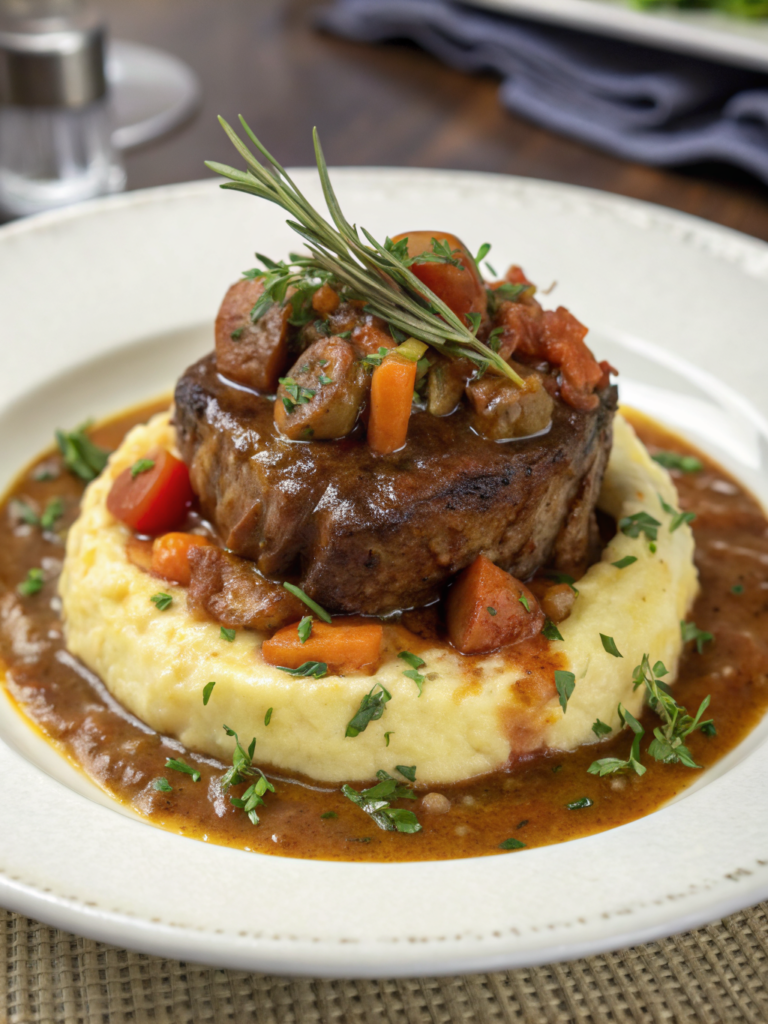
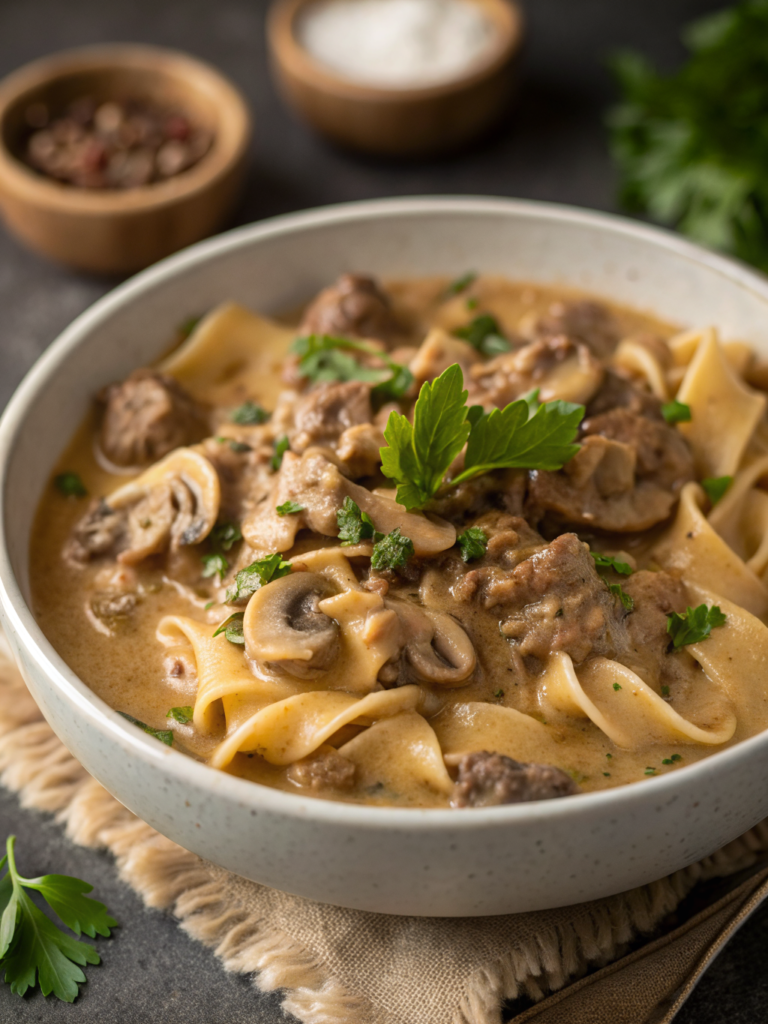
Once you master these beef rump roast recipes, try my Braised Beef Shank or Beef and Noodles next for more slow-roasted beef ideas!
Ingredients List
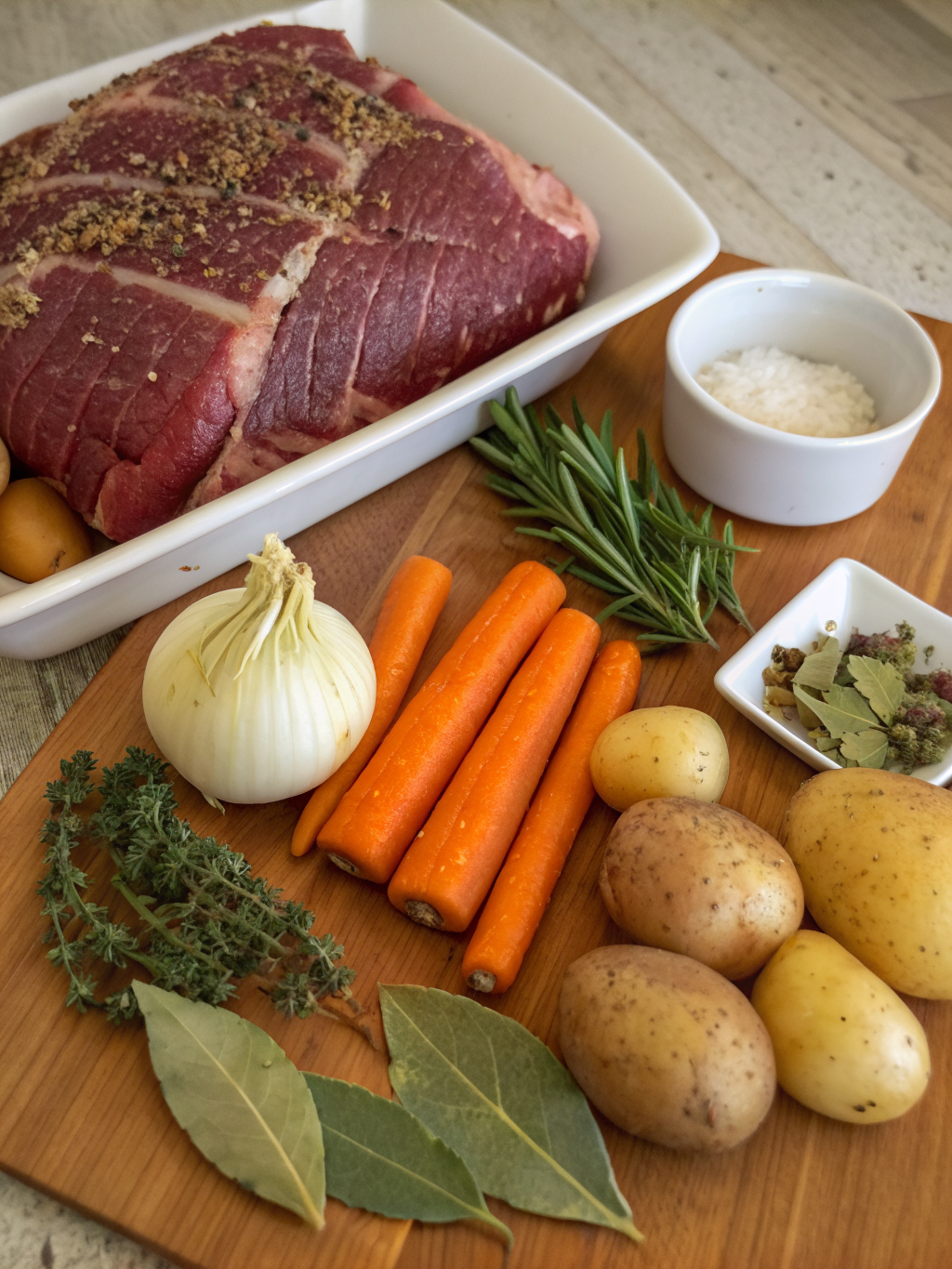
For a more aromatic profile, consider adding bay leaves, whole peppercorns, or a tablespoon of Worcestershire sauce. These ingredients create layers of flavor that penetrate the meat during cooking.
Once you master these beef rump roast recipes, try my Braised Beef Shank or Beef and Noodles next for more slow-roasted beef ideas!
How to Make It
This is just the overview for these beef rump roast recipes. Scroll down to the recipe card for exact measurements and timing.
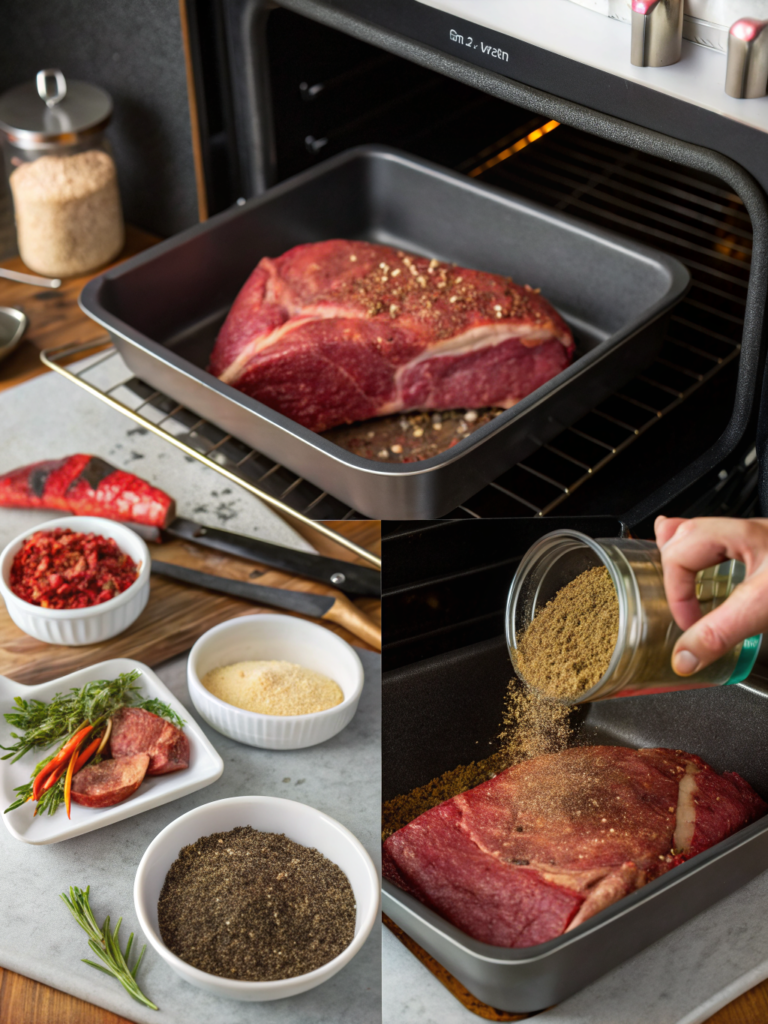
Sear the roast, then build aromatics with onion and carrot in the same pot. Add liquid, cover, and roast low and slow in the oven or slow cooker until fork-tender.
Make Ahead Method
- Season the roast up to 24 hours ahead and refrigerate uncovered, this dry-brining step genuinely improves both flavor and texture.
- The finished roast reheats well, making this a great choice for meal prep or feeding a crowd across multiple days.
- Freezes well for up to 3 months, sliced and stored with some of the cooking liquid to keep it moist.
Beef Rump Roast
Course: BeefCuisine: AmericanDifficulty: Medium4
servings30
minutes40
minutes300
kcalA tender, slow-roasted beef rump roast with carrots, onions, and potatoes.
Ingredients
3-4 lb beef rump roast
3 tbsp olive oil or avocado oil
4 cloves garlic, minced
2 tbsp fresh rosemary, chopped
2 tbsp fresh thyme leaves
2 tsp kosher salt
1 tsp black pepper
1 tsp smoked paprika
2 cups beef broth or red wine
3 large carrots, cut into chunks
2 large onions, quartered
4 medium potatoes, halved
Directions
- Prepare the roast. Bring to room temperature 45-60 minutes. Pat dry, trim excess fat, and score any remaining fat in a crosshatch pattern.
- Season generously. Combine salt, pepper, paprika, garlic, rosemary, and thyme. Rub the roast with oil, then press the seasoning firmly onto all surfaces.
- Sear. Heat oil in a Dutch oven over medium-high heat. Sear the roast on all sides until deeply browned, 3-4 minutes per side.
- Add aromatics. Remove the roast, saute onions and carrots 3-4 minutes, then return the roast on top. Pour broth or wine around, not over, the meat.
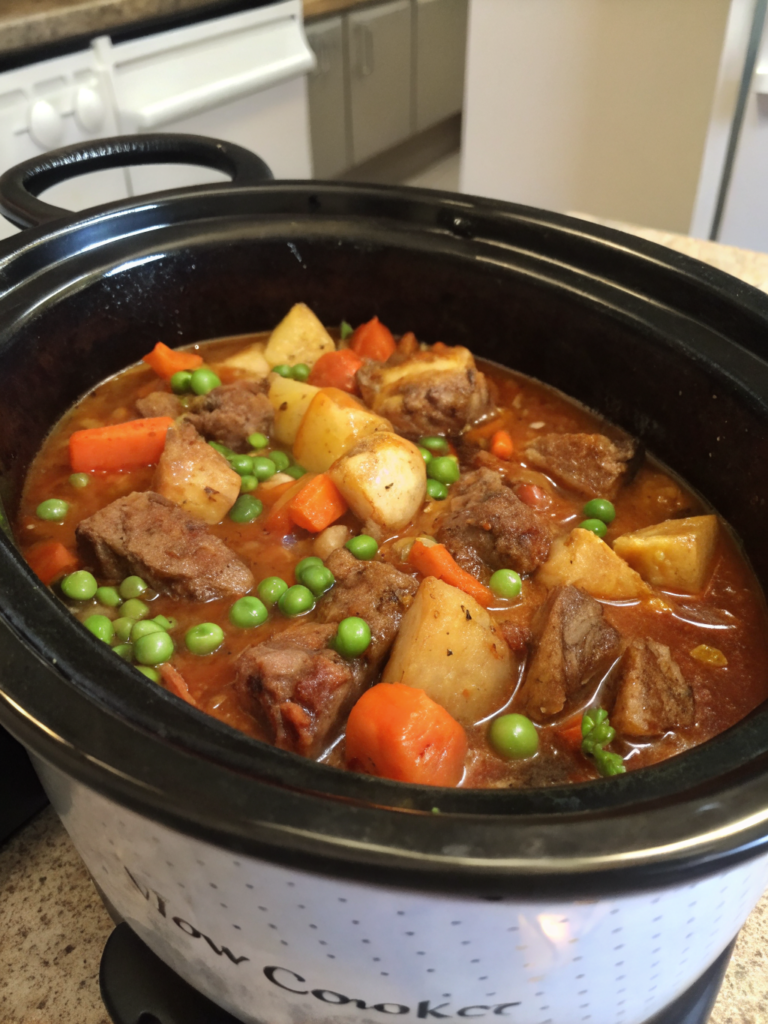
- Slow roast. Cover and roast at 325F for 2.5-3 hours, or transfer to a slow cooker for 6-8 hours on low, until fork-tender. Add potatoes in the last 90 minutes.
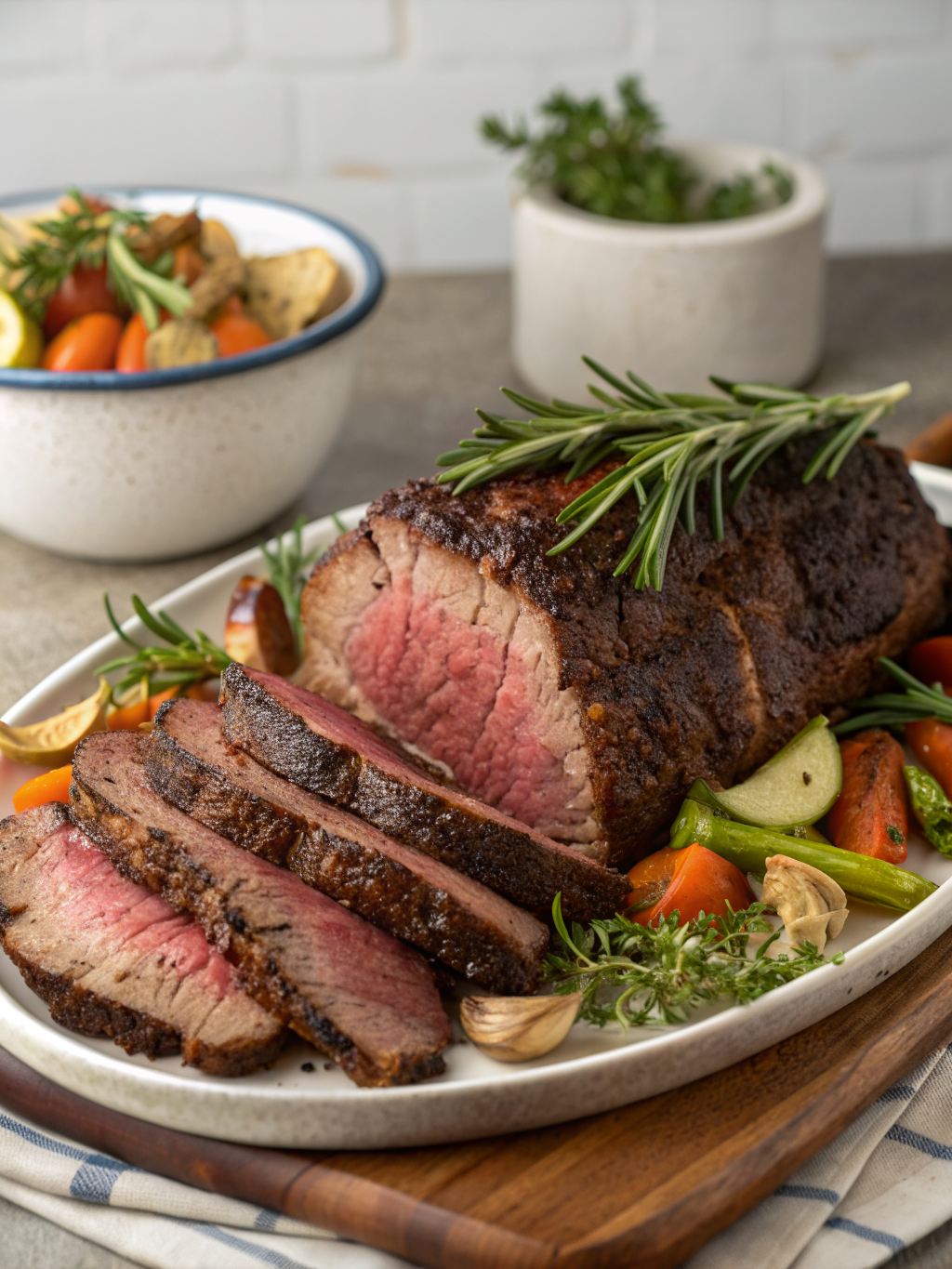
- Rest and slice. Rest 15-20 minutes, then slice against the grain.
Notes
- Do not skip the searing step, it builds flavor that the braise alone cannot replicate. Always slice against the grain, this shortens the muscle fibers and makes every bite noticeably more tender.
For food safety, beef should reach a minimum internal temperature of 145°F with a 3-minute rest (USDA guidelines), though this roast is cooked to 135-145°F depending on your preferred doneness.
Nutritional Information
A 4-ounce serving of properly prepared beef rump roast provides substantial nutritional benefits. This lean cut contains approximately 240 calories, with 35 grams of high-quality protein that supports muscle maintenance and satiety.
The fat content is relatively low at 10 grams per serving, with only 3.5 grams being saturated fat. Rump roast is an excellent source of iron, providing about 15% of your daily requirement, which is crucial for oxygen transport in the blood.
You’ll also get significant amounts of zinc (35% DV), vitamin B12 (40% DV), and niacin (25% DV). These nutrients support immune function, energy metabolism, and nervous system health. The selenium content (45% DV) acts as a powerful antioxidant.
Compared to fattier cuts like ribeye, rump roast contains approximately 30% fewer calories and 40% less fat while maintaining similar protein levels. This makes it an excellent choice for those watching their caloric intake without sacrificing nutrition.
Healthier Alternatives for the Recipe
To reduce sodium content, use low-sodium beef broth and decrease added salt by half. You can enhance flavor with sodium-free seasonings like lemon zest, additional herbs, or salt-free spice blends.
Replace potatoes with cauliflower florets or turnips for a lower-carbohydrate option that still provides satisfying texture. These alternatives reduce the overall glycemic load of the meal by approximately 60%.
For those monitoring fat intake, trim all visible fat before cooking and skim any fat from the cooking liquid before making gravy. Using cooking spray instead of oil for searing can save about 100 calories.
Add more vegetables like Brussels sprouts, parsnips, mushrooms, or celery to increase fiber content and create a more nutrient-dense meal. This boosts vitamin and mineral content while adding volume without significant calories.
Consider using grass-fed beef when possible. It contains higher levels of omega-3 fatty acids and conjugated linoleic acid (CLA), which may offer additional health benefits compared to conventional beef.
Serving Suggestions
Slice the tender roast and arrange it on a warm platter surrounded by the roasted vegetables. Drizzle with the reduced pan juices or create a simple gravy by thickening the cooking liquid with a cornstarch slurry.
For an elegant presentation, serve alongside creamy horseradish sauce, which cuts through the richness perfectly. Mix sour cream, prepared horseradish, a splash of lemon juice, and fresh chives for a restaurant-quality accompaniment.
Transform leftovers into French dip sandwiches by piling sliced beef onto crusty rolls and serving with warm au jus for dipping. This creates an entirely different meal that feels fresh and exciting.
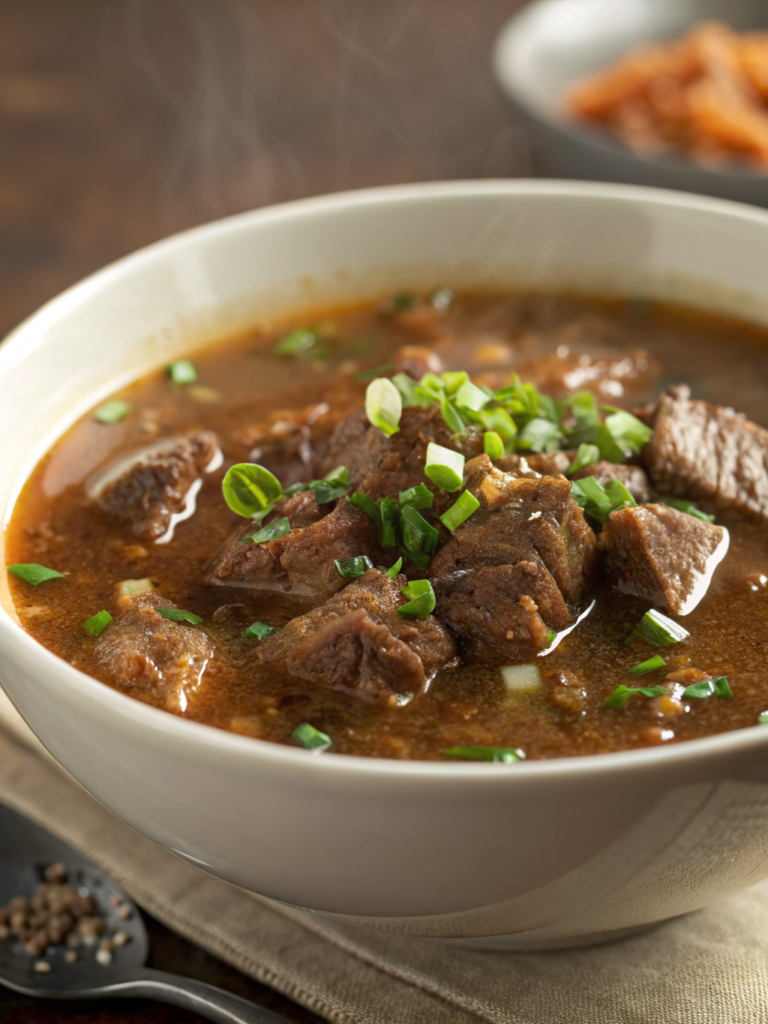
Create a hearty beef and vegetable soup by dicing leftover roast and simmering it with the vegetables, broth, and additional seasonings. Add barley or egg noodles for a complete comfort meal.
Pair with classic sides like garlic mashed potatoes, roasted Brussels sprouts with bacon, or a crisp Caesar salad. The versatility of beef rump roast recipes makes them perfect for both casual family dinners and special occasions.
Common Mistakes to Avoid
- Cooking straight from the refrigerator: Cold meat cooks unevenly, resulting in a gray band of overcooked meat around the edges. Always bring roasts to room temperature first.
- Skipping the searing step: Many people skip searing to save time, but this eliminates crucial flavor development. The caramelized crust adds depth that can’t be replicated otherwise.
- Using too high temperature: Cooking rump roast above 350°F causes the exterior to overcook before the interior reaches proper temperature. Low and slow is the key to tenderness.
- Not using a meat thermometer: Guessing doneness leads to overcooked, dry meat. Invest in an instant-read thermometer and remove the roast at 5°F below your target temperature.
- Cutting immediately after cooking: Slicing too soon causes all the flavorful juices to run out onto the cutting board instead of staying in the meat. Patience during resting is essential.
- Slicing with the grain: This makes even perfectly cooked meat seem tough. Always identify the direction of muscle fibers and cut perpendicular to them.
- Adding too much liquid: Rump roast should be roasted, not boiled. Excessive liquid creates a pot roast texture rather than a proper roast with caramelized exterior.
Storing Tips for the Recipe
Allow leftover roast beef to cool to room temperature within two hours of cooking to prevent bacterial growth. Slice or keep whole depending on your intended use—whole roasts retain moisture better during storage.
Wrap tightly in aluminum foil or place in airtight containers with any remaining cooking liquid. The liquid helps prevent the meat from drying out during refrigeration. Properly stored roast beef lasts 3-4 days in the refrigerator.
For longer storage, freeze sliced roast beef in portion-sized packages with some cooking liquid. Remove as much air as possible and label with the date. Frozen roast beef maintains quality for 2-3 months.
To reheat without drying out, place sliced beef in a covered dish with a few tablespoons of broth. Warm gently in a 300°F oven for 15-20 minutes, or microwave in 30-second intervals until heated through.
Store vegetables separately from the meat if possible, as they release moisture that can make the beef soggy. Keep pan juices in a separate container and skim solidified fat before reheating.
Conclusion
Mastering beef rump roast recipes opens up a world of affordable, delicious, and nutritious meal possibilities. By following these detailed instructions—from proper seasoning and searing to low-temperature roasting and adequate resting—you’ll achieve restaurant-quality results every time.
The key to success lies in patience and attention to detail. Whether you choose the traditional oven method or the convenience of a slow cooker, the principles remain the same: low heat, adequate moisture, and proper timing create tender, flavorful beef.
This versatile cut deserves a place in your regular dinner rotation. It’s economical, feeds a crowd, and provides excellent leftovers for quick weeknight meals. The nutritional benefits make it a smart choice for health-conscious families without sacrificing flavor or satisfaction.
Ready to transform your approach to beef roasts? Try this recipe this weekend and experience the difference proper technique makes. Share your results in the comments below—we’d love to hear about your favorite variations and serving suggestions. Don’t forget to explore our other beef recipes for more culinary inspiration!
FAQ
What is the best cooking method for rump roast?
Low, slow roasting in the oven or slow cooker works best. High heat toughens this lean cut, while low temperatures over several hours break down connective tissue for tender results.
Can I cook rump roast in a slow cooker?
Yes, sear it first for flavor, then cook on low for 6-8 hours or high for 4-5 hours until fork-tender.
Why is my rump roast tough?
For beef rump roast recipes, this usually means it was cooked too quickly at too high a temperature, or was not sliced against the grain. Both matter for tenderness.
How do I know when the roast is done?
Use a meat thermometer. Pull it at 135F for medium-rare or 145F for medium, keeping in mind the temperature will rise slightly during resting.
Can I freeze leftover rump roast?
Yes, leftovers from beef rump roast recipes freeze well. Freeze sliced portions with some cooking liquid for up to 2-3 months, thawing overnight in the fridge before reheating.
Try These Next
Did You Try Our Recipes?
Best recipe ever
I love it, absolutely delicious